
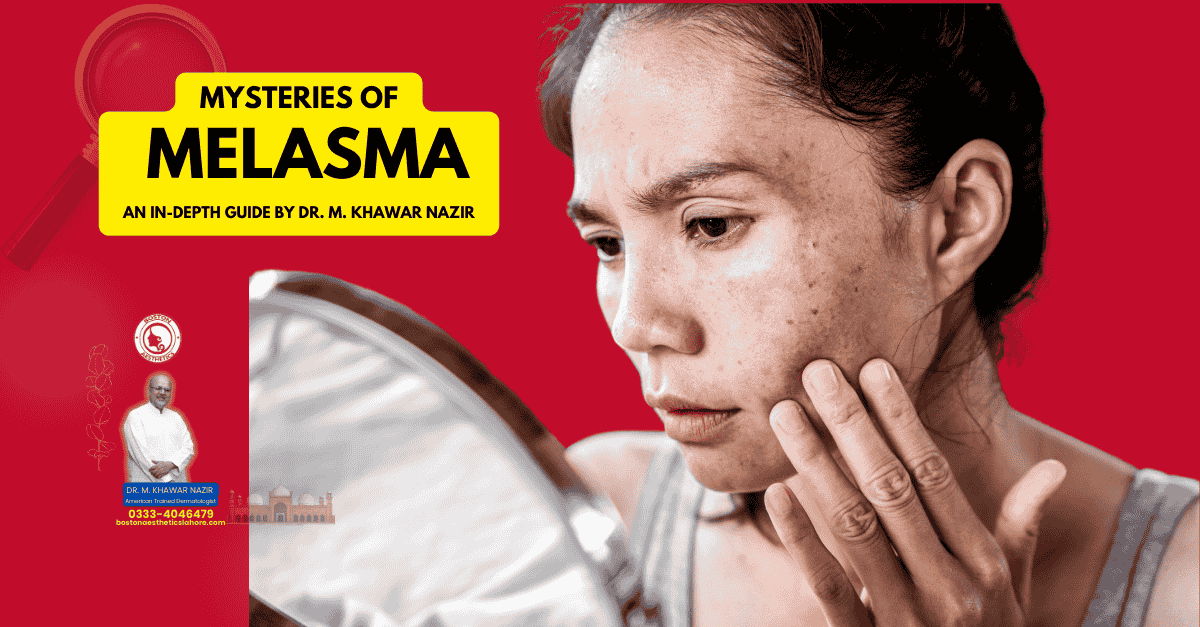
Mysteries of Melasma: An In-depth Guide by Dr. M. Khawar Nazir
Introduction
Melasma is a prevalent skin condition characterized by brown or gray-brown patches, primarily appearing on the face. At Boston Aesthetics in Lahore, under the expertise of American-trained dermatologist Dr. M. Khawar Nazir, we provide evidence-based approaches to effectively manage and treat this condition.
SUMMARY
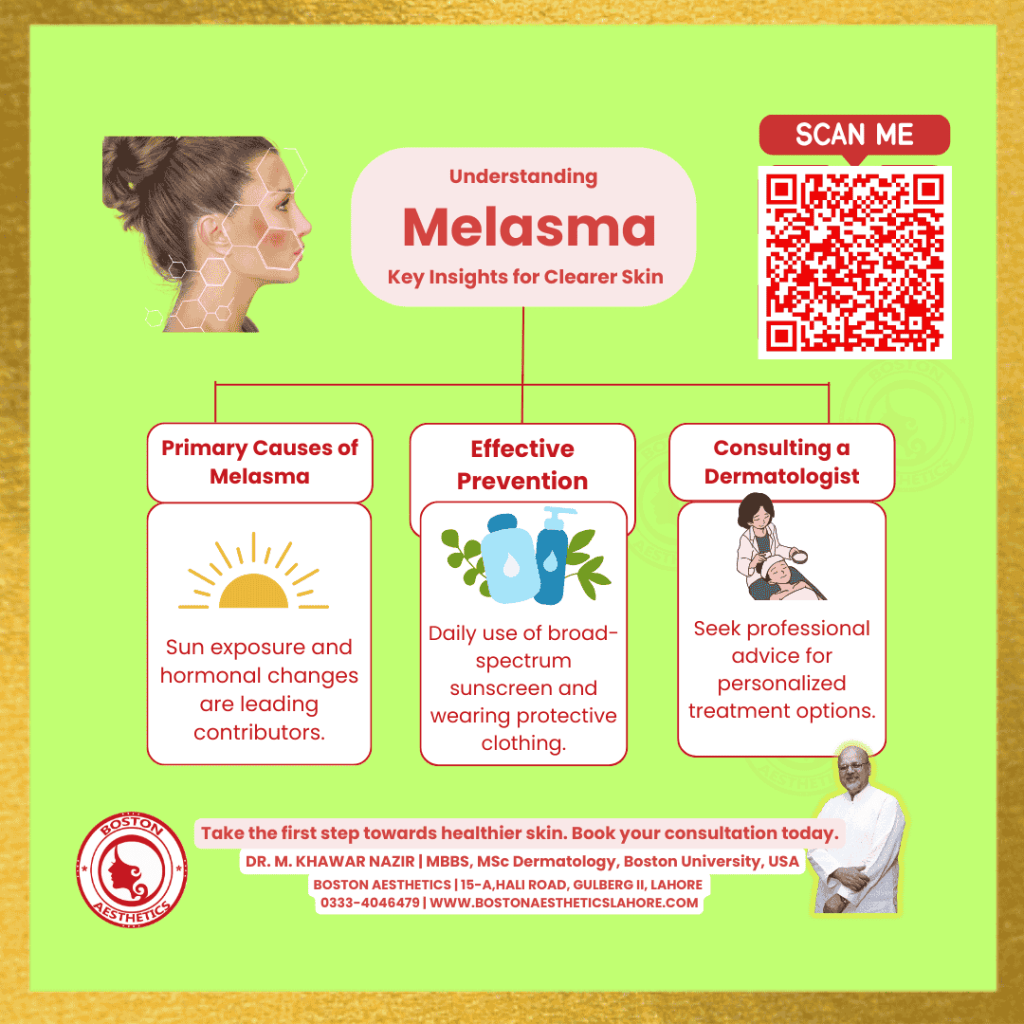
Melasma is a common skin condition characterized by brown or gray-brown patches, primarily on the face. Understanding its causes, symptoms, and treatment options is essential for effective management. Below is a concise summary addressing key aspects of melasma:
- Causes of Melasma:
- Genetic Factors: A family history of melasma increases susceptibility.
- Hormonal Changes: Fluctuations during pregnancy, menopause, or from oral contraceptives can trigger melasma.
- Sun Exposure: Ultraviolet (UV) radiation stimulates melanocytes, leading to pigmentation.
- Inflammation: Skin inflammation from various sources may contribute to melasma development.
- Medications: Certain drugs, including anti-seizure medications and corticosteroids, can exacerbate melasma.
- Symptoms:
- Dark, discolored patches appearing symmetrically on areas such as the cheeks, bridge of the nose, forehead, and upper lip.
- Risk Factors in South Asian Populations:
- High prevalence in Pakistani and Indian individuals due to increased sun exposure and the use of certain skin-lightening creams.
- Treatment Options:
- Topical Agents: Application of prescribed creams to lighten affected areas.
- Procedural Treatments: Options like chemical peels and laser therapy may be considered based on individual assessment.
- Sun Protection: Regular use of broad-spectrum sunscreen to prevent further pigmentation.
- Consultation Importance:
- Seeking advice from a qualified dermatologist is crucial for accurate diagnosis and personalized treatment planning.
For comprehensive care and tailored treatment plans, consider consulting with Dr. M. Khawar Nazir, an American-trained dermatologist at Boston Aesthetics in Lahore. Professional guidance ensures effective management of melasma and promotes healthier skin.
What Is Melasma?
Melasma is characterized by brown or gray-brown patches, mainly on the face. The areas most affected are the cheeks, bridge of the nose, forehead, and upper lip.
Melasma’s precise cause remains elusive but is believed to arise from a mix of factors such as genetics, hormonal shifts, sun exposure, inflammation, and specific medications. While the condition affects all skin tones, it predominantly manifests in individuals with darker skin as brown or grayish-brown facial patches. Although no definitive cure exists, multiple treatment avenues like topical lightening agents, laser therapy, and chemical peels offer symptomatic relief.
Prevalence in Males & Females
Although Melasma is commonly associated with women, especially those of childbearing age, it can also affect men. In fact, 10% of cases are reported in men.
General Causes:
Genetic Predisposition: Melasma frequently occurs in individuals who have a family lineage of the condition, suggesting that genetic factors play a crucial role in its onset. If a close relative has been affected by melasma, you may be at an elevated risk.
Hormonal Fluctuations: One of the leading triggers for melasma is the change in hormonal levels, commonly seen during phases like pregnancy, menopause, and while on oral contraceptive pills. These shifts can disrupt the skin’s melanin production, leading to hyperpigmentation.
Ultraviolet Radiation: Extended exposure to the sun’s harmful ultraviolet rays acts as a significant catalyst for melasma. UV radiation can not only cause skin damage but also prompt excessive melanin production, causing the characteristic dark patches of melasma to appear.
Inflammatory Factors: Melasma can also be induced by inflammation, which may stem from various sources like specific medications, pre-existing skin conditions, or even emotional stress. Inflammatory responses can exacerbate melanin synthesis, worsening the condition.
Medication Side-Effects: Certain pharmaceuticals, including anti-seizure drugs and corticosteroids, can aggravate melasma. These medications may interact with the skin’s pigmentation process, making the condition more pronounced.

Causes in Pakistani & Indian Females
Melasma is particularly prevalent in Pakistan and India due to factors like extreme sun exposure and the popularity of Steroid based mix formula skin-lightening creams, many of which are steroid-based and exacerbate the condition.
Role of Steroid-Based Skin Whitening Creams
These creams can lead to a rapid worsening of melasma and can have other harmful side effects like skin thinning.
Symptoms & Self-Care
Melasma typically causes dark, discolored patches on your skin. While sunscreen can play a role in self-care, visiting a dermatologist is essential for a thorough diagnosis and treatment plan.
Importance of Consulting a Dermatologist
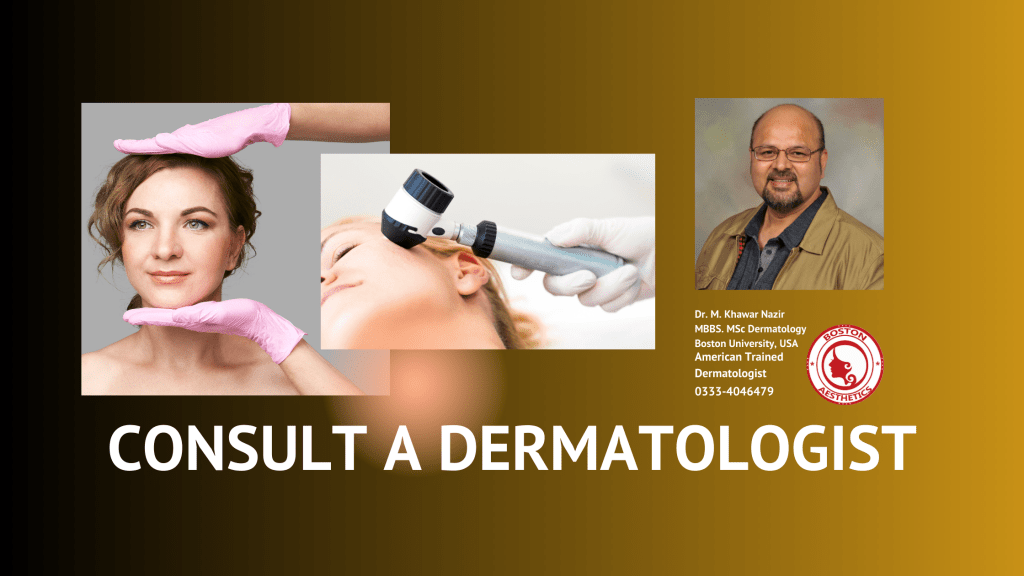
A proper diagnosis often requires an in-depth skin examination, sometimes utilizing a Wood’s lamp. This ensures an effective treatment plan that could involve topical treatments, LASER therapy, or a combination.
Duration and Prognosis
Treatment usually ranges from six months to a year. Prognosis varies but is generally favorable with early and appropriate management.
General Skin Care & Social Media Pitfalls
Be cautious of social media ‘experts’ who aren’t certified dermatologists. Improper treatments can exacerbate the condition.
The Role of Thyroid and Pregnancy
Thyroid imbalances and pregnancy can influence melasma. Hormone replacement therapy and birth control pills are other triggers.
LASER Treatments
Pico LASER is a state-of-the-art treatment which may help to some extent but my experience says that treatment with heat based devices can aggravate Melasma.
SPF For Melasma
I recommend at least SPF 30, reapplied every two hours for optimal sun protection.
The Challenge of Treating Melasma
Melasma can be persistent and may recur, which makes its treatment challenging.
Can Melasma Spread?
Yes, especially if exposed to triggers like sunlight or hormonal imbalances.
Cost of Melasma Treatment in Lahore
Treatment cost varies depending on the severity and the type of treatment required, generally ranging from PKR 10,000 to PKR 50,000.
| Aspect | Details |
|---|---|
| Definition | Melasma is a skin condition that causes dark, discolored patches, often on the face, including areas like the cheeks, nose, forehead, and upper lip. my.clevelandclinic.org |
| Causes | – Sun Exposure: Ultraviolet (UV) rays stimulate melanocytes, leading to increased melanin production. health.harvard.edu – Hormonal Changes: Pregnancy, birth control pills, and hormone therapy can trigger melasma due to increased estrogen and progesterone levels. aad.org – Genetics: A family history of melasma increases susceptibility. aad.org – Medications: Certain drugs, like anti-seizure medications, may contribute to melasma development. aad.org |
| Symptoms | – Brown or gray-brown patches on the skin. – Commonly appears on the face: cheeks, bridge of the nose, forehead, chin, and above the upper lip. – May also occur on other sun-exposed areas like the neck and forearms. my.clevelandclinic.org |
| Risk Factors | – Gender: More prevalent in women, especially during reproductive years. aad.org – Skin Type: Individuals with darker skin tones are at higher risk. aad.org – Family History: Genetic predisposition plays a role. aad.org |
| Prevention | – Sun Protection: Use broad-spectrum sunscreen with high SPF daily, wear wide-brimmed hats, and seek shade during peak sunlight hours. health.harvard.edu – Avoid Hormonal Triggers: Discuss alternative options with a healthcare provider if hormonal contraceptives are contributing to melasma. aad.org – Gentle Skincare: Avoid harsh products that can irritate the skin and potentially worsen melasma. aad.org |
| Treatment Options | – Topical Agents: Prescription creams containing hydroquinone can lighten affected areas. my.clevelandclinic.org – Procedures: Dermatological treatments like chemical peels or laser therapy may be considered in certain cases. my.clevelandclinic.org – Sun Protection: Consistent use of sunscreen is crucial to prevent worsening and recurrence. health.harvard.edu |
| Consultation | It’s essential to consult a dermatologist for an accurate diagnosis and personalized treatment plan. They can recommend appropriate therapies and monitor progress. my.clevelandclinic.org |
By understanding these facets of melasma, individuals can take proactive steps to manage and mitigate its effects, leading to healthier skin and improved confidence.
FAQ
Melasma is a common skin condition characterized by brown or gray-brown patches, primarily appearing on the face. While it doesn’t pose health risks, it can significantly impact one’s appearance and self-esteem. As an American-trained dermatologist at Boston Aesthetics in Lahore, I aim to provide comprehensive, evidence-based information to help you understand and manage melasma effectively.
What is the Main Cause of Melasma?
The exact cause of melasma remains unclear, but several factors contribute to its development:
- Sun Exposure: Ultraviolet (UV) radiation stimulates melanocytes, the cells responsible for pigment production, leading to dark patches. my.clevelandclinic.org
- Hormonal Changes: Fluctuations in hormones, such as during pregnancy or with the use of oral contraceptives, are linked to melasma. my.clevelandclinic.org
- Genetic Predisposition: A family history of melasma increases the likelihood of developing the condition.
- Certain Medications: Some medications can trigger melasma as a side effect.
Can Melasma Be Cured?
While there’s no definitive cure for melasma, various treatments can effectively manage and reduce its appearance. It’s important to note that melasma can be persistent and may require ongoing management.
Does Melasma Ever Go Away?
In some cases, especially when triggered by pregnancy or contraceptive use, melasma may fade on its own after hormonal levels stabilize. However, for many individuals, melasma can persist for years or even become a chronic condition.
What is the Best Cream to Remove Melasma?
Topical treatments are commonly used to lighten melasma patches. Hydroquinone is often considered the first line of treatment. Other topical agents include tretinoin, corticosteroids, azelaic acid, and kojic acid. It’s essential to consult with a dermatologist to determine the most appropriate treatment for your skin type and condition.
Is Vitamin C Good for Melasma?
Vitamin C is an antioxidant that can help brighten the skin and reduce pigmentation. Incorporating a vitamin C serum into your skincare routine may aid in managing melasma. However, it’s most effective when used in conjunction with other treatments and diligent sun protection.
Which Serum is Good for Melasma?
Serums containing ingredients like vitamin C, niacinamide, and tranexamic acid have shown promise in reducing melasma pigmentation. It’s advisable to consult with a dermatologist to select a serum tailored to your specific needs.
What Makes Melasma Worse?
Several factors can exacerbate melasma:
- Sun Exposure: UV radiation is a significant trigger.
- Hormonal Fluctuations: Changes in hormone levels can worsen melasma.
- Heat Exposure: Heat can stimulate melanocytes, leading to increased pigmentation.
- Certain Skincare Products: Products that irritate the skin can aggravate melasma.
At What Age Does Melasma Start?
Melasma typically appears in adults between the ages of 20 and 40, but it can develop earlier or later, depending on individual risk factors.
Can Diet Affect Melasma?
While there’s no direct evidence linking specific foods to melasma, a balanced diet rich in antioxidants may support overall skin health. Some studies suggest that folic acid deficiency could be associated with melasma, so incorporating folate-rich foods might be beneficial.
What is the Difference Between Hyperpigmentation and Melasma?
Hyperpigmentation is a broad term referring to any darkening of the skin, often resulting from increased melanin production. Melasma is a specific type of hyperpigmentation characterized by symmetrical, blotchy patches, primarily on the face, and is often linked to hormonal changes and sun exposure.
Which Hormone Increases Melasma?
Estrogen and progesterone are hormones that have been associated with the development of melasma, particularly during pregnancy or with the use of hormonal contraceptives.
What is the Fastest Way to Treat Melasma?
A combination of treatments often yields the best results:
- Topical Agents: Hydroquinone, tretinoin, and corticosteroids.
- Chemical Peels: Procedures that exfoliate the skin to reduce pigmentation.
- Laser Therapy: Advanced treatments that target pigmentation.
It’s crucial to consult with a dermatologist to develop a personalized treatment plan.
Which Vitamin is Best for Melasma?
Vitamins C and E are antioxidants that can help reduce pigmentation. Additionally, niacinamide (vitamin B3) has been shown to lighten dark spots and improve skin tone.
Can Vitamin D Reduce Melasma?
There is limited evidence to suggest that vitamin D directly reduces melasma. However, maintaining adequate vitamin D levels is essential for overall skin health.
Which Oil is Best for Melasma?
Some oils, like rosehip oil, contain antioxidants and vitamins that may help improve skin tone. However, oils can also increase photosensitivity, so it’s essential to use them cautiously and always apply sunscreen during the day.
Can Natural Remedies Like Lemon or Aloe Vera Remove Melasma?
Natural remedies such as lemon juice and aloe vera are often touted for skin lightening. However, lemon juice can be irritating and may worsen pigmentation. Aloe vera has soothing properties but is unlikely to significantly impact melasma. It’s best to consult with a dermatologist before trying natural remedies.
Is Melasma Permanent?
Melasma can be a long-lasting condition. While treatments can significantly reduce its appearance, maintenance therapy and sun protection are often necessary to prevent recurrence.
Book an Appointment
Tired of trying unreliable treatments for Melasma? Trust an expert. I’m Dr. M. Khawar Nazir, an American trained dermatologist. Visit Boston Aesthetics, Lahore, for a treatment plan tailored just for you. Book your appointment now at 0333-4046479. Your best skin awaits you.

Contact Details
Boston Aesthetics Lahore
15-A, Hali Road, Gulberg II, Lahore
For Aesthetic Treatments Appointment: 03334046479
Dr. M. Khawar Nazir, MBBS, MSc Dermatology, Boston University, USA
American Trained Dermatologist
Dermatologist, Cosmetic, LASER & Hair Transplant Surgeon
Also Available at Bahria Town Hospital
For consultations at Bahria International Hospital, Bahria Town Lahore, call at 042-111-296-297 for an appointment today.
If you can’t make it to the clinic, don’t worry—your skin health is still our priority. Dr. M. Khawar Nazir offers convenient online video consultations, allowing you to receive expert advice and personalised care from the comfort of your home. Whether you’re managing ongoing treatment or seeking advice on new concerns, our virtual consultations provide you with the same level of attention and care as an in-person visit. To book your online consultation, simply call or WhatsApp us at 03334046479.
Author Information:
Dr. M. Khawar Nazir, MBBS, MSc Dermatology, Boston University, USA
American Trained Dermatologist in Lahore
Dermatologist, Cosmetic, LASER & Hair Transplant Surgeon
Boston Aesthetics, 15-A, Hali Road, Gulberg II, Lahore | 03334046479
POLL
For more evidence-based information on Melasma, visit American Academy of Dermatology or PubMed.


Disclaimer
The information provided in this article is intended for general informational purposes only and should not be construed as medical advice. Readers are encouraged to consult with a qualified healthcare professional for personalized medical advice and treatment options. Reliance on any information provided in this article is solely at your own risk. Boston Aesthetics and Dr. M. Khawar Nazir do not endorse any specific tests, physicians, products, procedures, opinions, or other information mentioned herein. Always seek the advice of your physician or other qualified health provider with any questions you may have regarding a medical condition.
Leave a Reply