

Mind and Skin Health: The Science Behind Your Glow
Every wrinkle has a story.
Every spot, a message.
And sometimes, your skin is simply translating what your mind has been feeling.
In Lahore’s fast-paced rhythm, we meet patients daily who arrive thinking they need “just a cream” — but their skin is telling us something deeper. Stress, sleepless nights, and emotional strain have quietly been writing themselves across their face.
For Pakistani and Asian skin types, stress can accelerate:
- Acne and stubborn breakouts
- Melasma and pigmentation
- Eczema flare-ups
- Hair fall
- Premature wrinkles and dullness
The science is clear:
Your brain and skin talk to each other through what’s known as the neuro-immuno-cutaneous system — a communication pathway involving nerves, immune cells, and hormones.
When your brain senses stress, it releases cortisol. This hormone increases oil production, triggers inflammation, slows down skin repair, and can worsen pigmentation.
💡 Evidence shows: Managing stress can reduce inflammatory skin conditions by up to 40%.
At Boston Aesthetics Lahore, we don’t just treat skin. We address the story behind it — restoring your outer glow by calming the inner storm.
Why Mind and Skin Health Are Connected
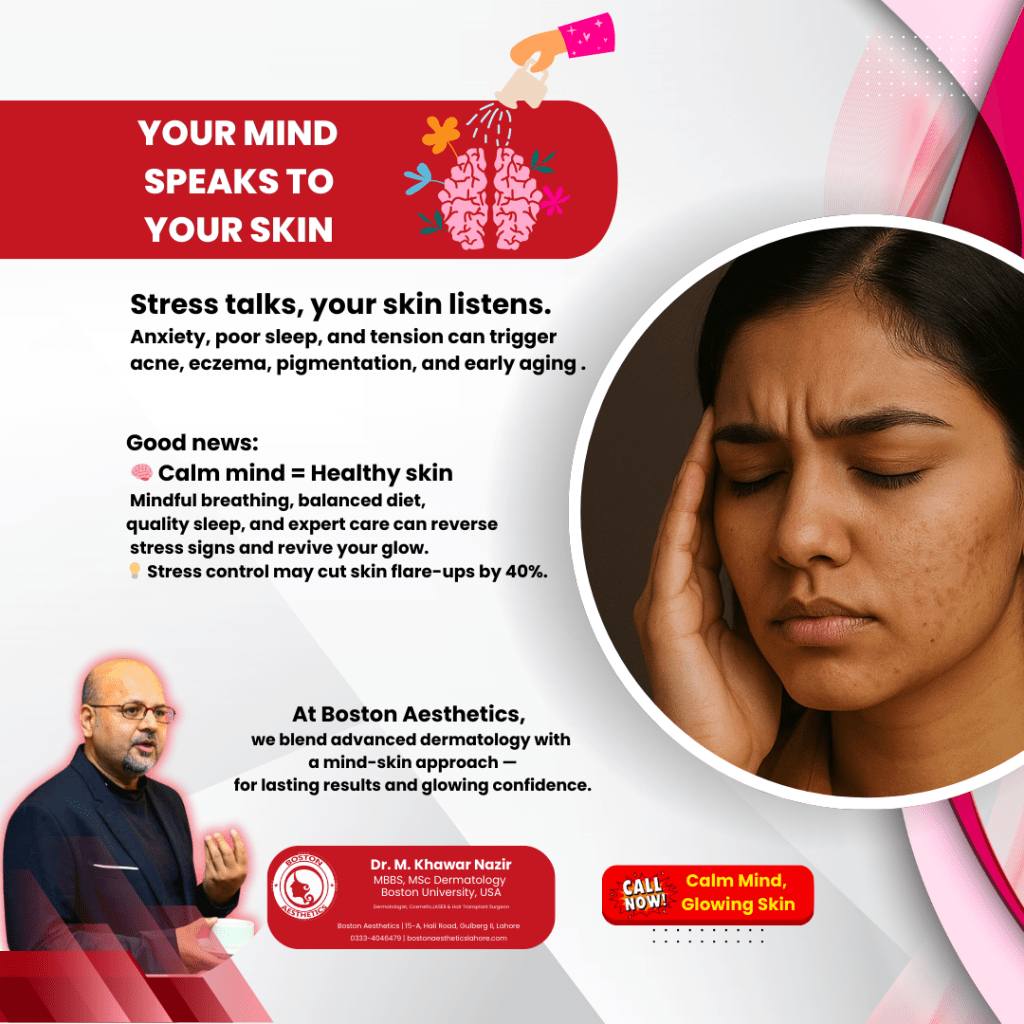
If you’ve ever blushed when embarrassed or broken out before a big event, you’ve already experienced the mind-skin connection.
Here’s how it works:
- Stress signal: Your brain detects emotional stress.
- Hormonal response: The adrenal glands release cortisol and adrenaline.
- Skin impact:
- Sebaceous glands overproduce oil → Acne.
- Inflammatory pathways activate → Eczema, psoriasis flare-ups.
- Melanocytes increase pigment production → Dark spots & melasma.
- Barrier damage: Stress slows skin barrier repair, leading to dryness, sensitivity, and faster aging.
For South Asian skin tones, the risk of post-inflammatory hyperpigmentation is higher. That means every breakout or rash can leave darker marks that take months to fade.
- Patient Awareness Campaigns on Steroid-Induced Dermatitis | Boston Aesthetics Lahore
- 5 Proven Ways to Calm Mind & Glow Skin in Lahore
- 5 Steps to Confident Nose Reshaping in Lahore
- 5 Shocking Truths About Lip Laser Rejuvenation
- Does Sunblock Give Complete Sun Protection?
Impact of Stress on Pakistani Skin Types
Living in Lahore, your skin faces a double challenge:
- Internal stress from lifestyle
- External stress from environment
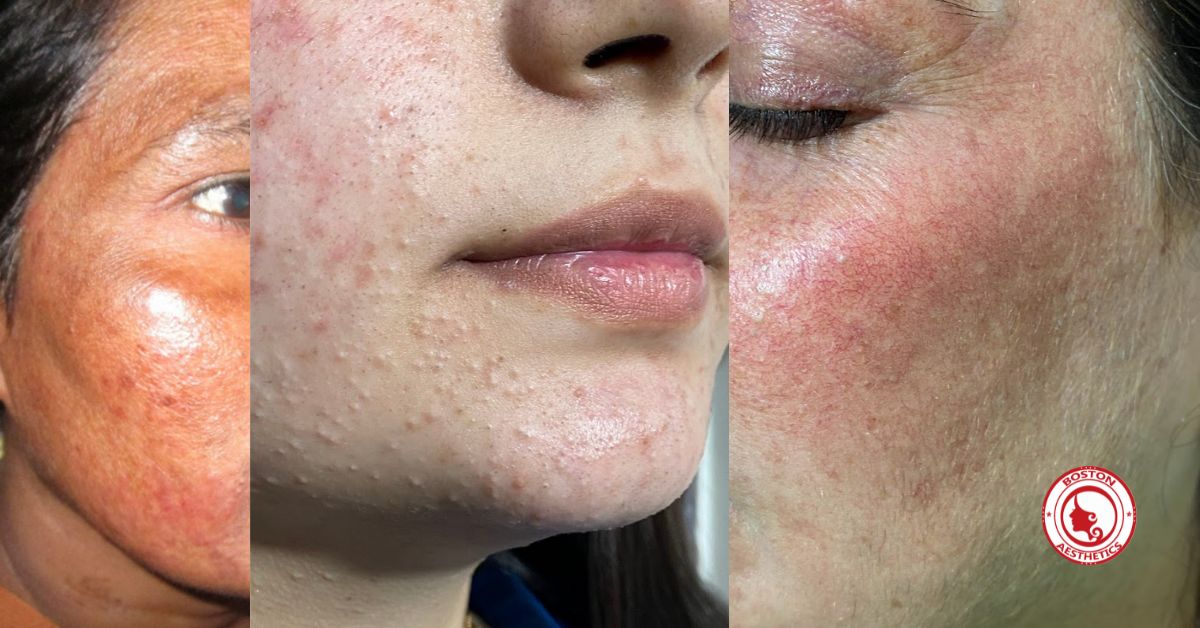
Common stress-related skin conditions in Pakistani & Asian skin:
- Acne & Adult-Onset Breakouts: Triggered by hormonal surges during stress.
- Melasma: Stress-induced hormones like ACTH can worsen pigmentation.
- Eczema & Psoriasis: Stress weakens immunity, making flares more frequent.
- Telogen Effluvium (Hair Fall): Stress pushes hair follicles into the shedding phase.
- Premature Aging: Cortisol breaks down collagen, leading to sagging skin.
The Lahore Lifestyle Factor
Our city is vibrant, but it’s also high-pressure.
Late nights, heavy traffic, high pollution levels, constant noise, and the “always busy” culture put both mind and skin under strain.
Additional Lahore-specific factors:
- High UV index year-round — worsens pigmentation.
- Air pollution — fine particles clog pores and cause oxidative stress.
- Diet — chai, fried snacks, high sugar intake spike inflammation.
- Sleep disruption — noise, light pollution, late-night work hours.
The combination of these environmental triggers with internal stress amplifies visible skin damage.
5 Proven Ways to Calm Mind & Glow Skin in Lahore
1. Practice Mindful Breathing Daily
Just 5 minutes of deep breathing reduces cortisol, balancing oil production and calming inflammation.
How to do it:
- Inhale for 4 seconds
- Hold for 7 seconds
- Exhale for 8 seconds
- Repeat for 5 minutes, ideally during Fajr or before bedtime.
2. Prioritize Quality Sleep
During deep sleep, your skin repairs collagen and renews cells. Without it, the skin barrier weakens, causing dullness and sensitivity.
Lahore-specific tips:
- Use blackout curtains to block city lights.
- Avoid caffeine after 4 pm.
- Keep a consistent bedtime, even on weekends.
3. Eat Anti-Inflammatory Foods
What you eat shows on your skin. Foods rich in antioxidants and omega-3s reduce inflammation and promote healing.
Pakistani diet upgrades:
- Add walnuts, almonds, fish, and flaxseeds.
- Replace sugary snacks with seasonal fruits.
- Drink more water — dehydration makes skin look tired.
4. Consult a Skin Expert
A dermatologist in Lahore understands how local climate, cultural habits, and skin biology interact.
At Boston Aesthetics, our stress-conscious dermatology approach includes:
- Skin barrier repair protocols
- Pigmentation treatments safe for Asian skin
- Lifestyle and stress assessment for long-term results
5. Create a Self-Care Ritual
Daily rituals signal safety to your nervous system, reducing stress reactivity.
Evening self-care example:
- Gentle cleanser → Hydrating mask → SPF for next day’s prep
- Gratitude journaling before sleep
Posts
FAQs: Mind and Skin Health in Lahore
Q: Can stress cause acne in adults?
Yes. Stress increases oil production and inflammation, triggering breakouts at any age.
Q: Does meditation help pigmentation?
Indirectly — by lowering stress hormones that can worsen pigmentation.
Q: How long to see results from stress management?
Usually 6–12 weeks with consistent routines.
Q: Can Pakistani skin recover without harsh treatments?
Yes — with consistent, dermatologist-guided care and lifestyle changes.
Conclusion: Your Mind is Your Skin’s Best Friend
When you care for your mind, your skin begins to heal itself.
At Boston Aesthetics Lahore, we believe the best glow comes from harmony — between your inner calm and outer care.
✨ Your glow starts within.
Author:
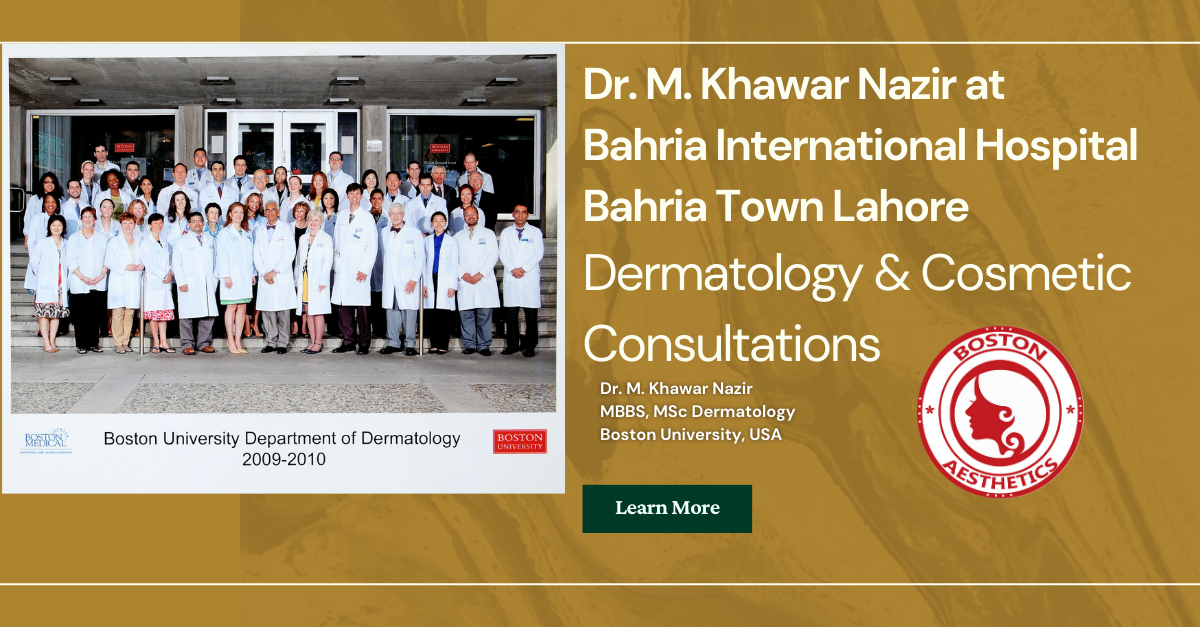
Dr. M. Khawar Nazir – MBBS, MSc Dermatology (Boston University, USA)
American-Trained Dermatologist, Cosmetic, LASER & Hair Transplant Surgeon
Boston Aesthetics | 15-A, Hali Road, Gulberg II, Lahore | 📞 0333-4046479
Medical Disclaimer: This article is for educational purposes only and does not replace personalised medical advice. Always consult a qualified dermatologist before starting any treatment.
Leave a Reply