
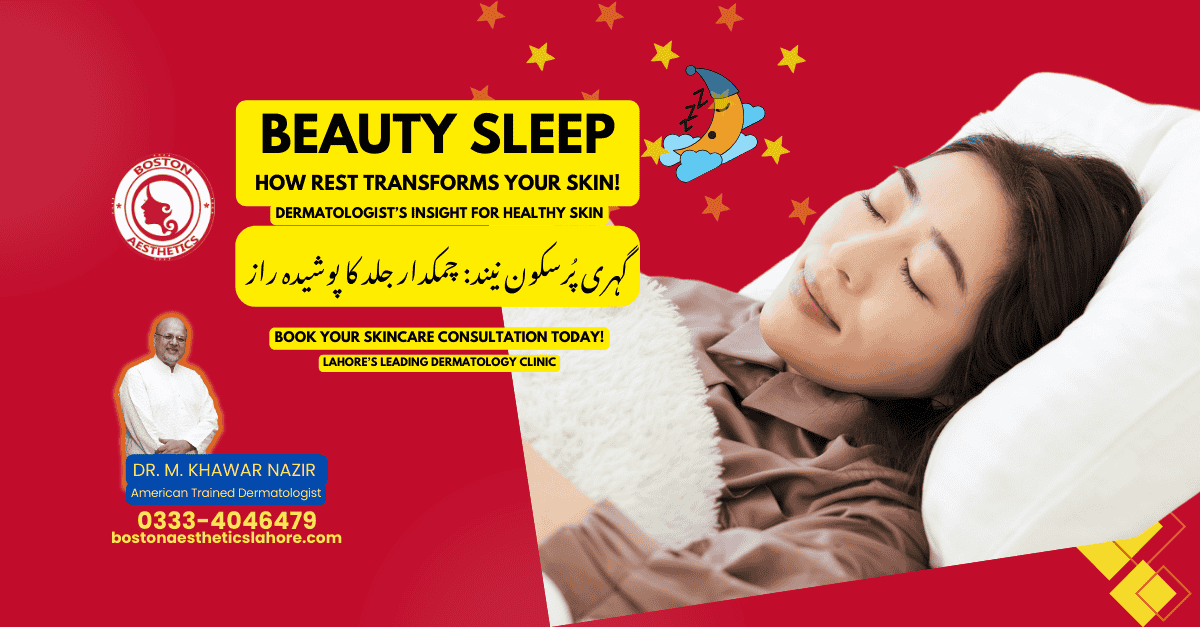
The Secret to Youthful Skin Lies in Your Sleep
Have you ever woken up to puffy eyes, dark circles, or dull skin after a restless night? It’s no coincidence. Your skin regenerates and repairs itself while you sleep, making quality rest an essential part of your skincare routine. In this blog post, we will explore the undeniable connection between sleep and skin health and how you can optimize your rest for a radiant complexion.
Radiant Skin with Quality Sleep: Insights from Boston Aesthetics Lahore
At Boston Aesthetics, Lahore, we believe in holistic skincare solutions, and getting adequate sleep is one of the simplest yet most powerful ways to maintain youthful, glowing skin. Let’s dive into the science behind beauty sleep and how it can transform your skin.
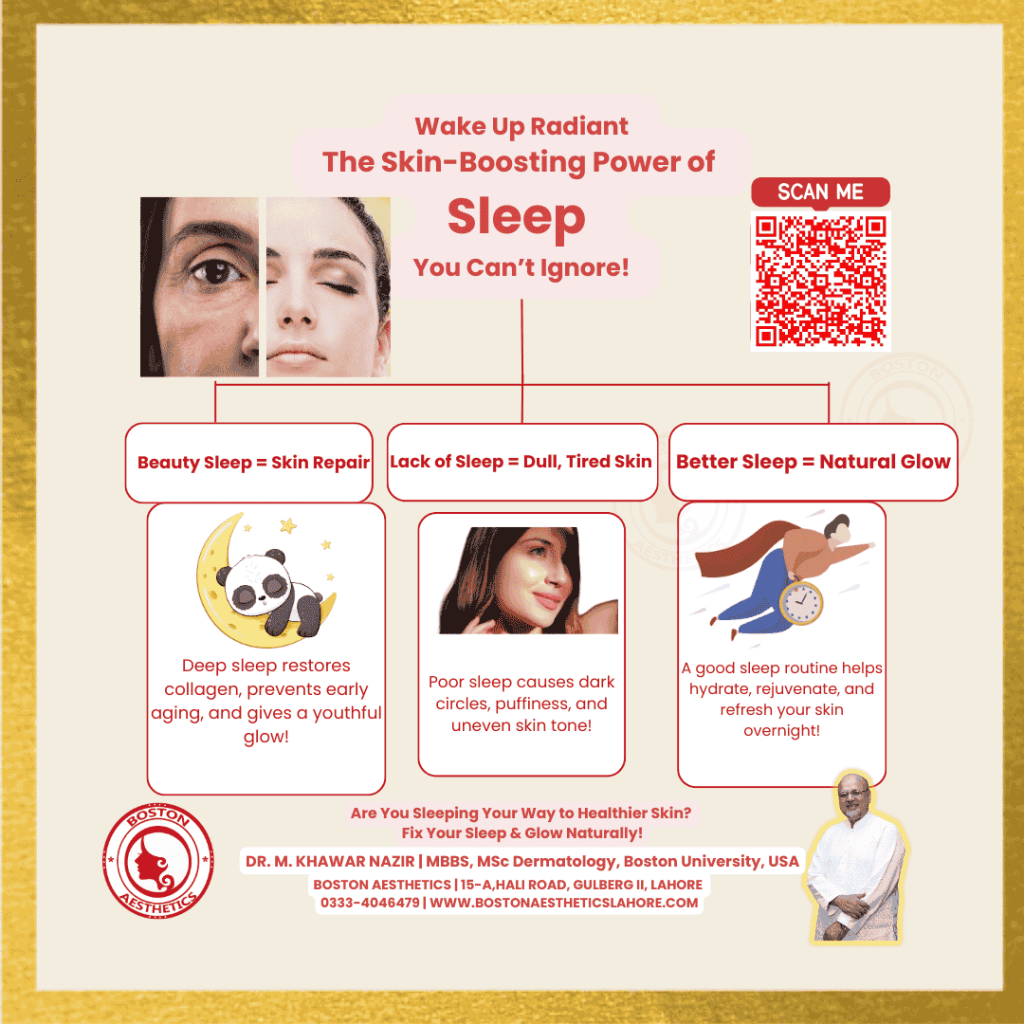
Your skin heals, glows, and rejuvenates while you sleep! But lack of rest can cause dark circles, dullness, and premature aging.
Solution? Prioritize your beauty sleep for naturally radiant skin!
Summary: How Sleep Transforms Your Skin Health
- Sleep Fuels Skin Regeneration: Your skin repairs itself while you sleep, producing collagen and renewing cells. Poor sleep disrupts this cycle, leading to dullness, fine lines, and early aging.
- Hydration & Glow: A good night’s sleep locks in moisture, preventing dryness and irritation. Sleep deprivation can cause dehydration, making skin appear lifeless and tired.
- Dark Circles & Breakouts: Lack of rest increases stress hormones, which trigger oil production, leading to acne and worsening under-eye circles. Consistent sleep helps prevent these issues.
- Essential Tips for Beauty Sleep: Follow a nighttime routine—use silk pillowcases, avoid screens, sleep in a dark room, and hydrate well to maximize skin benefits.
- The Science of Beauty Sleep: Sleep reduces stress hormones, boosts blood circulation, and enhances skin renewal, ensuring a fresher, healthier look every morning.
The Science Behind Sleep and Skin Health
1. How Sleep Affects Skin Regeneration
Your skin undergoes a natural renewal process every night. During deep sleep, your body produces growth hormones that stimulate cell repair and collagen production, crucial for maintaining firm, elastic skin. When you skip sleep, your skin misses out on this vital regeneration period, leading to premature aging.
2. Sleep and Hydration Balance
Sleep plays a critical role in maintaining skin hydration. Insufficient sleep disrupts water balance, leading to dryness, increased sensitivity, and a dull complexion. Well-rested individuals have plumper, more hydrated skin, reducing the appearance of fine lines and wrinkles.
3. Cortisol and Skin Aging
When you’re sleep-deprived, your body releases more cortisol, the stress hormone. High cortisol levels trigger inflammation, break down collagen, and accelerate signs of aging like sagging skin, fine lines, and wrinkles.


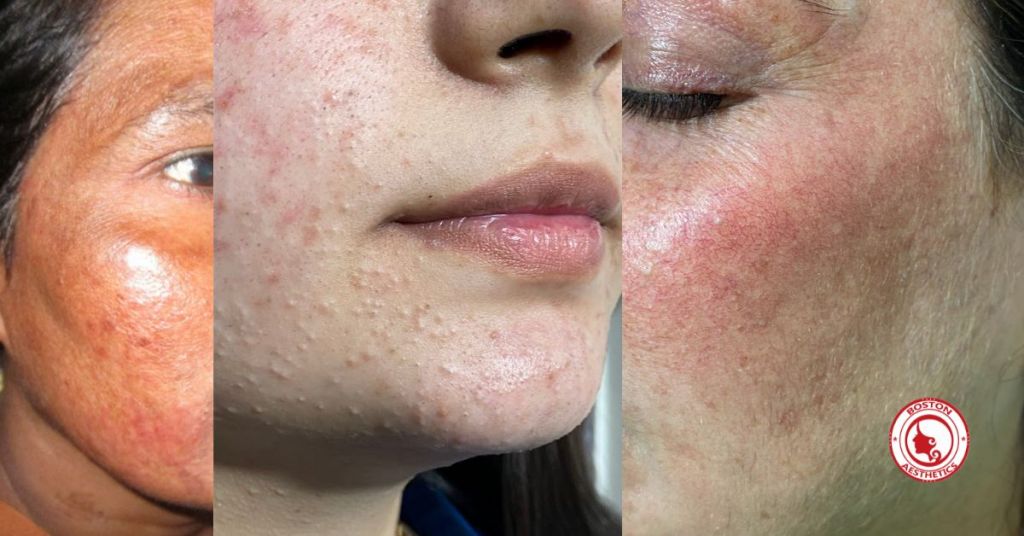
Common Skin Problems Due to Poor Sleep
1. Dark Circles and Puffy Eyes
Lack of sleep dilates blood vessels under the eyes, leading to dark circles and puffiness. Fluid retention worsens the condition, making your eyes look tired and aged.
2. Increased Breakouts and Acne
Poor sleep increases stress hormones, which stimulate oil production in your skin, leading to clogged pores and breakouts. This is particularly problematic for individuals prone to acne.
3. Dull and Uneven Skin Tone
Your skin regenerates new cells at night. When you don’t get enough rest, dead skin cells accumulate, causing a dull, lifeless complexion.
4. Fine Lines and Wrinkles
Lack of sleep reduces collagen production, causing skin to lose its firmness and elasticity. This accelerates the formation of fine lines and wrinkles.
Tips to Improve Sleep for Better Skin
1. Maintain a Consistent Sleep Schedule
Aim for 7-9 hours of sleep every night. Going to bed and waking up at the same time helps regulate your body’s internal clock, promoting restful sleep and healthy skin.
2. Create a Relaxing Nighttime Routine
A calming pre-bedtime routine can improve sleep quality. Try:
- Avoiding screen time 1-2 hours before bed
- Using silk pillowcases to reduce skin friction
- Applying a hydrating night cream
- Drinking chamomile tea to relax
3. Improve Sleep Environment
Make your bedroom a sleep-friendly space by:
- Keeping the room cool and dark
- Investing in a comfortable mattress and pillows
- Using essential oils like lavender for relaxation
4. Avoid Late-Night Snacking and Caffeine
Heavy meals and caffeine close to bedtime can interfere with sleep quality. Opt for light snacks like almonds or yogurt if you feel hungry before bed.
5. Manage Stress
Chronic stress disrupts sleep and impacts skin health. Engage in activities like yoga, meditation, or deep breathing exercises to unwind before bedtime.
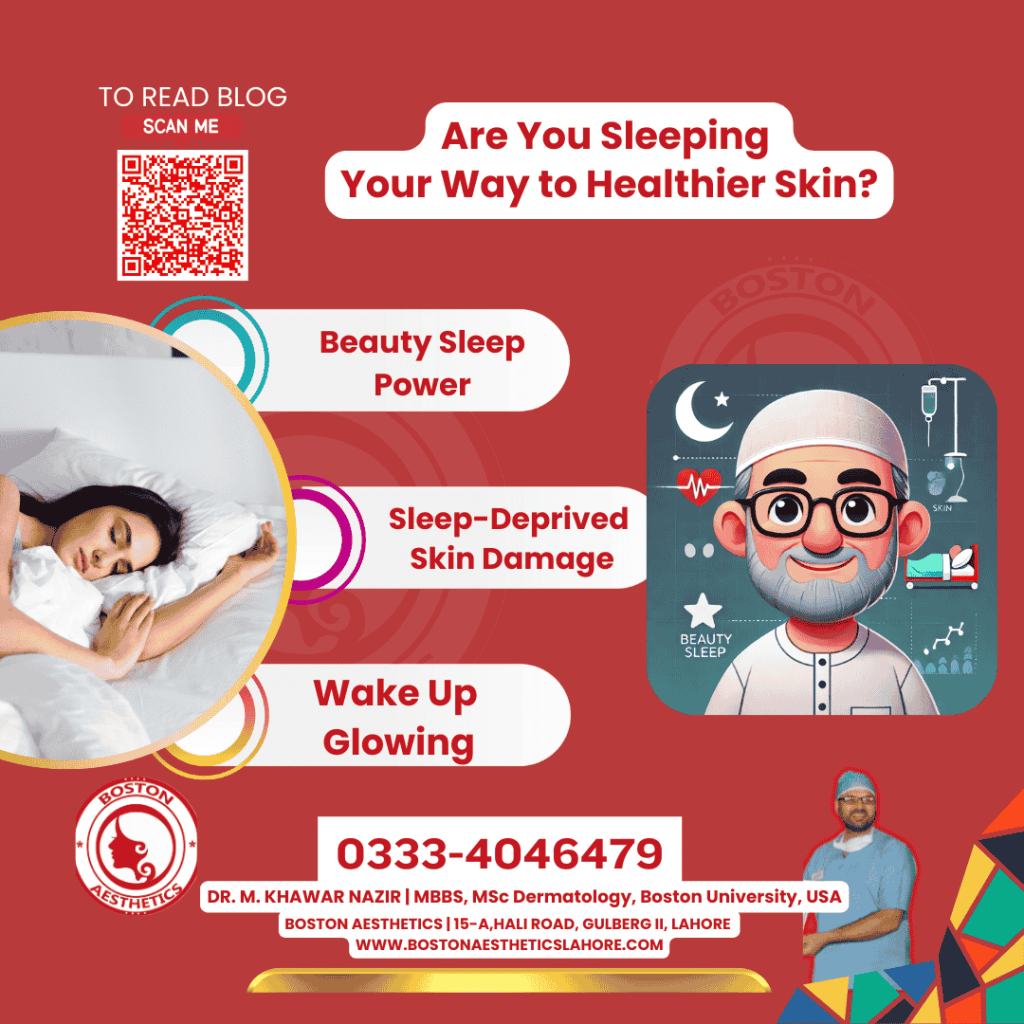
Your sleep habits could be the secret to glowing skin or the reason behind dullness, dark circles, and premature aging!
Power of Beauty Sleep: Wake up refreshed with a youthful glow!
Sleep-Deprived Skin Damage: Poor rest leads to fine lines, puffiness & tired skin.
Wake Up Glowing: Fix your sleep cycle & see the transformation!
Comprehensive Guide: The Connection Between Sleep & Skin Health
| Aspect | Explanation |
|---|---|
| How Sleep Affects Skin | Sleep allows the skin to repair and regenerate. During deep sleep, the body produces collagen, which helps maintain firm and youthful skin. |
| Signs of Poor Sleep on Skin | Common issues include dark circles, puffiness, dryness, dull skin, acne breakouts, and premature aging. |
| Collagen & Elasticity | Reduced sleep lowers collagen production, leading to fine lines, wrinkles, and sagging skin. |
| Hydration & Glow | Sleep regulates skin hydration. Poor sleep disrupts moisture balance, causing dryness and an uneven complexion. |
| Dark Circles & Puffiness | Sleep deprivation dilates blood vessels, leading to dark circles and swelling under the eyes. |
| Breakouts & Acne | Stress hormones increase with lack of sleep, leading to excessive oil production and clogged pores, resulting in acne. |
| Sleep & Skin Repair | Skin heals itself at night, repairing damage from sun exposure, pollution, and other environmental stressors. |
| Best Sleep Practices for Healthy Skin | – Maintain a consistent sleep schedule (7-9 hours nightly). |
- Sleep in a dark, cool room with good ventilation.
- Use silk pillowcases to reduce friction and prevent wrinkles.
- Apply a hydrating night cream before bed.
- Keep electronic devices away from the bed to improve sleep quality. | | How Stress Affects Sleep & Skin | Stress increases cortisol levels, which break down collagen and cause inflammation, leading to dull and irritated skin. Engaging in relaxation techniques like meditation and deep breathing before bed can help. | | Ideal Sleep Position for Better Skin | Sleeping on your back prevents facial creases and reduces the chances of wrinkles. Side sleeping can cause skin folding and aging signs. Using an ergonomic pillow can help maintain a good posture. | | Foods That Improve Sleep & Skin | Eat foods rich in antioxidants, vitamin C, omega-3, and melatonin, such as nuts, berries, fish, and herbal teas. Avoid sugary foods and excessive caffeine intake before bedtime. | | Things to Avoid Before Bed for Better Skin | – Avoid caffeine and heavy meals before sleep.
- Reduce screen time to prevent blue light exposure, which interferes with melatonin production.
- Avoid alcohol and smoking, as they dehydrate the skin.
- Ensure your sleeping environment is clean and free from allergens to prevent skin irritations. | | DIY Skincare Night Routine for Glowing Skin | – Cleanse your face to remove dirt and makeup.
- Use a mild exfoliator twice a week.
- Apply a hydrating serum and moisturizer.
- Use an eye cream to reduce puffiness.
- Sleep on a clean pillowcase to avoid bacteria buildup.
- Use a humidifier if you have dry skin to maintain optimal hydration levels. | | Emotional Benefits of Quality Sleep | Good sleep enhances self-confidence, reduces stress, and contributes to overall well-being, making you feel happier and more energetic. It also helps in maintaining hormonal balance, which plays a key role in skin health. | | Consult a Skin Expert for Tailored Advice | If you struggle with persistent skin concerns, consult Dr. M. Khawar Nazir, MBBS, MSc Dermatology, Boston University, USA – American Trained Dermatologist in Lahore at Boston Aesthetics, Gulberg, Lahore.
- (no title)
- (no title)
- (no title)
- Acne and Scar Treatments
- Advanced Laser Hair Removal Lahore
- American Trained Dermatologist Lahore
- Anti-Aging Treatments by Dr. Khawar Nazir, Lahore
- Best Dermatologist in Lahore
- Best Hydrafacial in Gulberg Lahore
- Best Skin Specialist & Laser Clinic in Lahore
- Contact Us (Old Back up)
- Dermatologist in Lahore – Boston Aesthetics Gulberg II
- Expert Dermatology Services in Lahore | Boston Aesthetics
- Finding the Best Skin Specialist in Lahore
- Gallery
- Glow Facial in Lahore – Radiant Skin Awaits You!
- Hair Transplant Surgery in Lahore
- Home (Old Back up)
- Latest Skincare Trends by Dr. M. Khawar Nazir
- Medical & Advertising Disclaimer | Boston Aesthetics Lahore
- Medical-Grade HydraFacial Lahore | Book Now
- Men’s Grooming at Boston Aesthetics Lahore
- Patients Medical Record System
- Privacy Policy
- Skin Specialist & Laser Clinic Lahore
- Skin Specialist in Lahore
- Trusted Dermatologist & Skin Care Specialist in Lahore
- (no title)
- Experienced Dermatologist in Lahore
FAQs: Sleep and Skin Health
1. How many hours of sleep do I need for healthy skin?
Aim for 7-9 hours of quality sleep each night to allow optimal skin repair and rejuvenation.
2. Can poor sleep cause acne?
Yes, inadequate sleep increases stress hormones that trigger oil production, leading to breakouts.
3. Does sleeping late affect my skin?
Yes, late-night sleep disrupts the skin’s natural repair cycle, leading to premature aging and dullness.
4. Can sleeping on my side cause wrinkles?
Yes, constant pressure on the skin while sleeping can contribute to fine lines and wrinkles over time.
5. Do sleep positions affect skin health?
Sleeping on your back is the best position to prevent wrinkles and sagging skin.
6. Can using the wrong pillowcase affect my skin?
Yes, rough pillowcases can cause friction and irritation. Opt for silk or satin pillowcases to protect your skin.
7. Can sleep deprivation cause dry skin?
Yes, lack of sleep disrupts skin hydration, making it dry and flaky.
8. Is beauty sleep real?
Yes! Your skin undergoes repair and rejuvenation during deep sleep, contributing to a youthful appearance.
9. How can I prevent dark circles caused by lack of sleep?
Getting adequate sleep, staying hydrated, and using an eye cream with caffeine can help reduce dark circles.
10. Does drinking water before bed improve skin health?
Yes, staying hydrated helps maintain skin moisture, but avoid excessive intake right before bedtime to prevent sleep disturbances.
- Infographics in dermatology
- Patient Awareness Campaigns on Steroid-Induced Dermatitis | Boston Aesthetics Lahore
- 5 Proven Ways to Calm Mind & Glow Skin in Lahore
- 5 Steps to Confident Nose Reshaping in Lahore
- 5 Shocking Truths About Lip Laser Rejuvenation
Conclusion: Prioritize Sleep for Radiant, Healthy Skin
Your skincare routine isn’t complete without quality sleep. From promoting collagen production to preventing premature aging, restful sleep is the foundation of glowing, youthful skin. At Boston Aesthetics, Lahore, we advocate for a holistic approach to skincare, combining expert dermatological treatments with lifestyle adjustments to help you achieve the best results.
If you’re struggling with skin concerns, book a consultation with Dr. M. Khawar Nazir, MBBS, MSc Dermatology, Boston University, USA – American Trained Dermatologist in Lahore at Boston Aesthetics, Gulberg, Lahore to get expert advice tailored to your skin needs.
Why Vote?
- See if your sleep habits match your skin’s health!
- Discover how others manage their beauty sleep.
- Share your results and challenge friends to vote!
Bonus: Comment your best bedtime skincare tip! Your advice might help someone wake up with healthier skin.
Tag a friend who needs a beauty sleep check!
This poll will increase engagement, spark curiosity, and encourage social sharing while staying within Google Ads policies. Let me know if you need any refinements!
Contact Information
Boston Aesthetics Lahore
15-A, Hali Road, Gulberg II, Lahore
For Aesthetic Treatments Appointment: 03334046479
Dr. M. Khawar Nazir, MBBS, MSc Dermatology, Boston University, USA
American Trained Dermatologist
Dermatologist, Cosmetic, LASER & Hair Transplant Surgeon
Also Available at Bahria Town Hospital
For consultations at Bahria International Hospital, Bahria Town Lahore, call at 042-111-296-297 for an appointment today.
If you can’t make it to the clinic, don’t worry—your skin health is still our priority. Dr. M. Khawar Nazir offers convenient online video consultations, allowing you to receive expert advice and personalised care from the comfort of your home. Whether you’re managing ongoing treatment or seeking advice on new concerns, our virtual consultations provide you with the same level of attention and care as an in-person visit. To book your online consultation, simply call or WhatsApp us at 03334046479.
Author Information:
Dr. M. Khawar Nazir, MBBS, MSc Dermatology, Boston University, USA
American Trained Dermatologist in Lahore
Dermatologist, Cosmetic, LASER & Hair Transplant Surgeon
Boston Aesthetics, 15-A, Hali Road, Gulberg II, Lahore | 03334046479


Posts

Disclaimer:
This article is for informational purposes only and does not constitute medical advice. Consult a qualified dermatologist before making any changes to your skincare routine.
Leave a Reply