
Eczema vs Psoriasis: What a Lahore Skin Specialist Says
Introduction:
If you’ve ever dealt with persistent skin itching, redness, or scaly patches, you might wonder whether it’s eczema or psoriasis. Both conditions are common, yet they differ significantly in causes, symptoms, and treatments. In this blog, Dr. M. Khawar Nazir, an American-trained dermatologist at Boston Aesthetics, Gulberg, Lahore, breaks down these conditions to help you understand their differences and seek the right care.
Understanding Eczema
What is Eczema?
Eczema, also known as atopic dermatitis, is a chronic condition causing inflammation, redness, and itchiness. It often starts in childhood and may persist into adulthood.
Symptoms of Eczema:
- Intense itching, especially at night
- Dry, cracked skin
- Red or brownish-gray patches on the skin
- Small, raised bumps that may ooze fluid when scratched
Common Causes of Eczema:
- Genetic predisposition
- Environmental triggers (pollution, weather changes)
- Allergens like pollen, dust mites, or pet dander
- Stress and hormonal changes
Eczema in Lahore:
With Lahore’s humid summers and dry winters, eczema sufferers often experience flare-ups. Seek professional advice to manage symptoms effectively.
Understanding Psoriasis
What is Psoriasis?
Psoriasis is an autoimmune disorder where the immune system speeds up the life cycle of skin cells. This leads to the buildup of cells on the surface of the skin, forming scales and red patches.
Symptoms of Psoriasis:
- Thick, silvery scales on red patches of skin
- Dry, cracked skin that may bleed
- Burning or itching around patches
- Nail changes (pitting or discoloration)
- Joint pain in some cases (psoriatic arthritis)
Common Triggers of Psoriasis:
- Genetic factors
- Infections (strep throat, skin infections)
- Stress and injury to the skin
- Certain medications
Psoriasis in Lahore:
Pollution and stress, common in urban areas like Lahore, can trigger psoriasis flare-ups. Early diagnosis and treatment are crucial for management.

Eczema vs Psoriasis: Key Differences
| Feature | Eczema | Psoriasis |
|---|---|---|
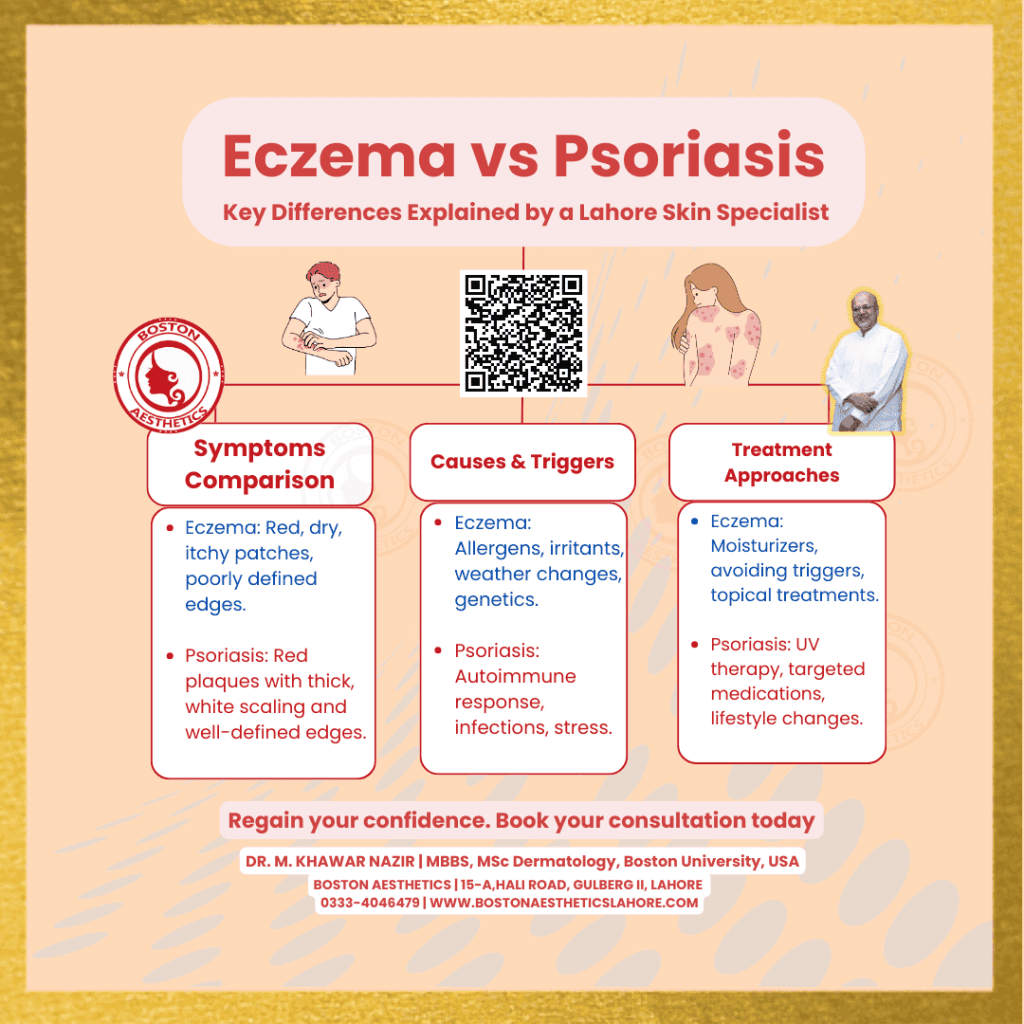
| Symptoms | Itchy, dry, cracked skin | Red patches with silvery scales |
| Triggers | Allergens, irritants, weather changes | Autoimmune response, infections |
| Affected Areas | Hands, face, elbows, behind knees | Scalp, elbows, knees, lower back |
| Treatment | Moisturizers, lifestyle changes, medications | Topical treatments, UV therapy, medication |
Treatment Options in Lahore
For Eczema:
- Moisturizers: Use emollient-rich creams to prevent dryness.
- Avoid Triggers: Identify and reduce exposure to allergens.
- Medical Treatments: Anti-inflammatory creams and light therapy can help.
For Psoriasis:
- Topical Treatments: Creams containing salicylic acid or coal tar.
- Light Therapy: Effective in reducing symptoms during flare-ups.
- Lifestyle Changes: Stress management and a balanced diet play a significant role.
Visit Boston Aesthetics in Lahore for a tailored treatment plan.
FAQ Section: Eczema vs Psoriasis: A Lahore Specialist Explains
1. How do I know if it’s eczema or psoriasis?
Eczema usually appears as poorly demarcated red, dry areas with fine scaling. Psoriasis, on the other hand, presents as red, well-circumscribed plaques with white, heaped-up scaling. If you’re uncertain about your condition, it’s essential to consult a dermatologist for a precise diagnosis. Visit Dr. M. Khawar Nazir, American Trained Dermatologist at Boston Aesthetics, Lahore, for a professional evaluation.
2. What is the difference between psoriasis and dermatitis?
Psoriasis is an autoimmune disease where the immune system accelerates the life cycle of skin cells, causing scales and red patches. Dermatitis, including eczema, is often triggered by environmental factors like allergens or irritants. Both conditions cause inflammation, but their underlying causes and treatments differ.
3. Can eczema be cured?
Eczema cannot be entirely cured as it is a chronic condition. However, it can be effectively managed through moisturization, avoiding triggers, and using dermatologist-recommended treatments. Early intervention helps in preventing severe flare-ups.
4. Is eczema an autoimmune disease like psoriasis?
Unlike psoriasis, eczema is not classified as an autoimmune disease. It is more of an inflammatory skin condition, often triggered by allergens, irritants, or environmental factors.
5. Can eczema turn into psoriasis?
While eczema and psoriasis are distinct conditions, it is rare but possible for someone to have both conditions. They do not “turn into” one another, but overlapping symptoms might occur in certain individuals.
6. What is the root cause of eczema?
The exact cause of eczema is not entirely understood but is believed to involve a combination of genetic and environmental factors. A weakened skin barrier and an overactive immune response to irritants also contribute to its development.
7. What is the fastest way to heal eczema?
To heal eczema quickly:
- Use thick moisturizers to lock in hydration.
- Apply dermatologist-recommended topical creams to reduce inflammation.
- Avoid irritants like harsh soaps, fragrances, or detergents.
- Keep your environment humid, especially during dry seasons.
- Consult Dr. M. Khawar Nazir in Lahore for a tailored treatment plan.
8. What deficiency causes eczema?
Vitamin D deficiency has been linked to eczema, as it may impair the skin’s ability to fight inflammation. Omega-3 fatty acid deficiencies can also affect skin health.
9. What soap is best for eczema?
Gentle, fragrance-free, and hypoallergenic soaps are ideal for eczema-prone skin. Look for products labeled for sensitive skin. In Lahore, products like Cetaphil Gentle Cleansing Bar or Aveeno Skin Relief Body Wash can help. Avoid using harsh antibacterial soaps.
10. Is Dettol good for eczema?
Dettol is not recommended for eczema as it can irritate the skin and worsen the condition. Instead, use mild, dermatologist-approved cleansers.
11. Is Vaseline good for eczema?
Yes, Vaseline (petroleum jelly) is an excellent choice for eczema. It helps to lock in moisture, protect the skin barrier, and prevent dryness.
12. Is Dove soap okay for eczema?
Dove’s unscented and sensitive-skin soaps are generally safe for eczema. However, always check the label and patch-test before regular use.
13. What is the 3-minute rule for eczema?
The 3-minute rule emphasizes moisturizing your skin within three minutes of bathing or washing. This locks in hydration and prevents your skin from drying out.
14. What ointment is good for eczema?
Ointments containing ceramides, colloidal oatmeal, or hydrocortisone (as prescribed by a doctor) can help alleviate eczema symptoms. Avoid self-medicating and consult a specialist like Dr. M. Khawar Nazir for professional advice.
15. Is aloe vera good for eczema?
Aloe vera has soothing and anti-inflammatory properties, which can relieve mild eczema symptoms. Always use pure aloe vera gel and avoid products with added fragrances or alcohol.
16. What foods help eczema?
Foods rich in omega-3 fatty acids (like fish, flaxseeds, and walnuts), antioxidants (like berries and leafy greens), and probiotics (like yogurt) can support skin health and reduce inflammation.
17. What is the best cream for eczema?
The best creams for eczema include those containing ceramides, glycerin, or shea butter. DR K DERM LINE Moisturizing Lotion and Aveeno Eczema Therapy Cream are popular options recommended by dermatologists.
18. Is hot water good for eczema?
No, hot water can strip the skin of its natural oils, exacerbating eczema. Opt for lukewarm baths and limit bath time to 10-15 minutes.
19. What triggers psoriasis flare-ups?
Common triggers for psoriasis include stress, infections, cold weather, skin injuries, and certain medications. Lifestyle adjustments and early treatment can help reduce flare-ups.
20. Can I marry a person with psoriasis?
Yes, psoriasis is not contagious and does not pose any risk to a spouse or partner. With proper management, individuals with psoriasis can lead a healthy life.
21. What is the new treatment for eczema in 2024?
Recent advancements focus on biologic therapies and targeted treatments that address specific immune pathways responsible for eczema. Consult Dr. M. Khawar Nazir to learn about available treatments in Lahore.
Conclusion: Managing Eczema and Psoriasis in Lahore
Understanding the differences between eczema and psoriasis is crucial for effective management. Both conditions require professional care tailored to individual needs. As an American-trained dermatologist, Dr. M. Khawar Nazir provides comprehensive care for skin disorders at Boston Aesthetics in Lahore.
Contact Information
Boston Aesthetics Lahore
15-A, Hali Road, Gulberg II, Lahore
For Aesthetic Treatments Appointment: 03334046479
Dr. M. Khawar Nazir, MBBS, MSc Dermatology, Boston University, USA
American Trained Dermatologist
Dermatologist, Cosmetic, LASER & Hair Transplant Surgeon
Also Available at Bahria Town Hospital
For consultations at Bahria International Hospital, Bahria Town Lahore, call at 042-111-296-297 for an appointment today.
If you can’t make it to the clinic, don’t worry—your skin health is still our priority. Dr. M. Khawar Nazir offers convenient online video consultations, allowing you to receive expert advice and personalised care from the comfort of your home. Whether you’re managing ongoing treatment or seeking advice on new concerns, our virtual consultations provide you with the same level of attention and care as an in-person visit. To book your online consultation, simply call or WhatsApp us at 03334046479.
Author Information:
Dr. M. Khawar Nazir, MBBS, MSc Dermatology, Boston University, USA
American Trained Dermatologist in Lahore
Dermatologist, Cosmetic, LASER & Hair Transplant Surgeon
Boston Aesthetics, 15-A, Hali Road, Gulberg II, Lahore | 03334046479


Leave a Reply