

Oral Minoxidil for Hair Loss: Is It Safe? Pros & Cons Explained
Hair loss is a common concern, especially for those living in Lahore, Pakistan, where environmental stress and lifestyle factors can exacerbate the problem. As more individuals look for solutions beyond topical treatments, oral Minoxidil has gained attention. But is it safe for hair loss treatment, and does the cosmetic benefit outweigh the potential risks? In this blog post, we’ll explore the pros and cons of oral Minoxidil, its FDA approval, and whether it’s worth considering for your hair restoration journey.
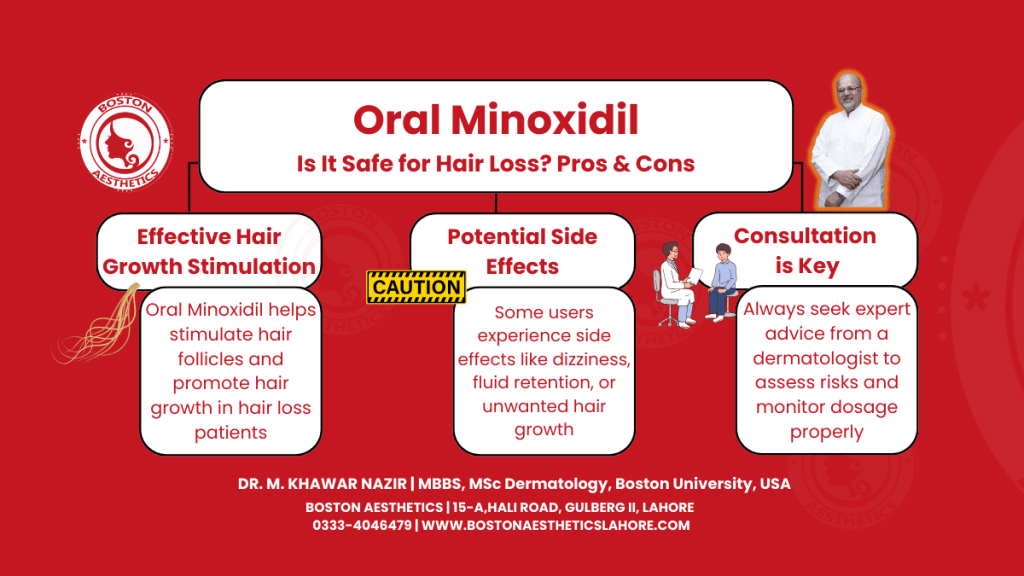
Summary of “Oral Minoxidil: Is It Safe for Hair Loss? Pros & Cons”
- What is Oral Minoxidil?
Oral Minoxidil is a prescribed treatment for managing hair thinning and promoting regrowth. Originally developed for other conditions, it is now being used at lower doses for hair health. - How Does Oral Minoxidil Work for Hair Loss?
It helps improve blood flow to hair follicles, potentially revitalizing dormant follicles and promoting hair regrowth. It is effective for individuals experiencing generalized hair thinning or specific types of hair loss. - Pros of Oral Minoxidil
- Convenient compared to topical alternatives.
- Effective for widespread thinning or when topical treatments cause irritation.
- Can show results in as little as 3-6 months with consistent use.
- Cons and Precautions
- Possible side effects include mild shedding in the beginning, dizziness, or fluid retention.
- Regular follow-ups with a qualified dermatologist are essential to monitor its effects and minimize risks.
- Is Oral Minoxidil Safe and Right for You?
Oral Minoxidil can be safe when prescribed by an experienced dermatologist. A consultation ensures the treatment aligns with your hair loss type and overall health.
For personalized advice, visit Boston Aesthetics, 15-A, Hali Road, Gulberg II, Lahore to consult Dr. M. Khawar Nazir, American Trained Dermatologist, for safe and effective hair restoration solutions.
What is Oral Minoxidil?
Oral Minoxidil was originally developed to treat high blood pressure but was found to have a unique side effect—hair growth. It led to the topical Minoxidil we commonly see in treatments like Rogaine. However, oral Minoxidil for hair loss is now gaining traction as an off-label treatment.
As an American-trained dermatologist in Lahore, Dr. M. Khawar Nazir of Boston Aesthetics is often asked about this new approach to hair restoration. Let’s break down the facts and separate the hype from reality.
FDA Approval and Safety
One of the first questions many patients ask is whether oral Minoxidil is FDA-approved for hair loss treatment. The answer is no—oral Minoxidil has not received FDA approval for hair restoration. However, it is commonly prescribed off-label by dermatologists for patients who have not seen satisfactory results with topical solutions.
That said, being an off-label treatment doesn’t mean it’s unsafe. The key lies in monitoring and caution. Oral Minoxidil needs to be prescribed and monitored by a healthcare professional who understands the possible side effects and can adjust your dose accordingly.
Pros of Oral Minoxidil for Hair Loss
- Convenience
Oral Minoxidil is much easier to use than topical solutions. No more applying it twice a day to your scalp—just one pill and you’re done. It is ideal for people who find the messiness of topical treatments cumbersome. - Effective for Those Resistant to Topicals
If topical Minoxidil hasn’t worked for you, oral Minoxidil may be the next step. Studies have shown that oral Minoxidil can help people who haven’t responded well to the topical form. - Hair Growth
Oral Minoxidil can promote denser hair growth across your scalp, unlike topical solutions that may only target certain areas.

Cons of Oral Minoxidil
- Side Effects
One of the biggest concerns with oral Minoxidil is the risk of side effects. These can range from mild issues like headaches to more severe ones like rapid heartbeat and fluid retention. Unlike topical treatments, which mostly remain localized, oral Minoxidil affects your entire system, potentially leading to more pronounced side effects. - Monitoring Required
Regular follow-ups with a dermatologist are essential when taking oral Minoxidil. Since it was originally designed for blood pressure control, your heart rate and other vital signs should be closely monitored to ensure there are no adverse reactions. - Unwanted Hair Growth
Some patients experience hypertrichosis (excessive hair growth) in areas where hair isn’t desired, such as the face or hands. This side effect can be a dealbreaker for many.
Who Should Consider Oral Minoxidil?
Oral Minoxidil is generally recommended for patients who have tried and failed with topical treatments or those suffering from more aggressive forms of hair loss, such as female or male pattern baldness. Before beginning treatment, a full assessment with Dr. M. Khawar Nazir is essential to determine if you’re a good candidate.



How is Oral Minoxidil Administered?
Dosage typically starts at a low range and is adjusted based on your response to treatment and any side effects. Most patients begin with a 0.25mg to 1mg daily dose, which may be increased over time under close supervision by a qualified dermatologist.
Minoxidil for Cosmetic Use
One question often raised is whether oral Minoxidil is worth it purely for cosmetic purposes. Given the potential side effects and need for close monitoring, it’s crucial to weigh the benefits against the risks. If you’re looking for a quick fix without medical oversight, oral Minoxidil may not be the best choice. However, for those committed to long-term hair restoration under professional care, it can be an effective solution.
Cautions and Monitoring Needed
As mentioned, monitoring is essential. Patients need regular blood pressure checks and heart monitoring to catch any early signs of adverse effects. At Boston Aesthetics, Dr. M. Khawar Nazir offers comprehensive follow-ups to ensure your treatment is safe and effective.
Expectations vs Reality
While oral Minoxidil can be highly effective, it’s not a miracle cure. Results can take up to 3-6 months to become noticeable, and it doesn’t work for everyone. Patients should be prepared for realistic outcomes, understanding that it may take time to see visible results.
- Infographics in dermatology
- Patient Awareness Campaigns on Steroid-Induced Dermatitis | Boston Aesthetics Lahore
- 5 Proven Ways to Calm Mind & Glow Skin in Lahore
- 5 Steps to Confident Nose Reshaping in Lahore
- 5 Shocking Truths About Lip Laser Rejuvenation
TABLE SUMMARY
| Category | Details |
|---|---|
| What is Oral Minoxidil? | Oral Minoxidil is a prescription medicine used to treat hair thinning and promote hair regrowth. It was originally designed for other health issues but is now used in low doses for hair health. |
| How Does It Work? | It increases blood flow to hair follicles, strengthens them, and helps revive dormant follicles, leading to improved hair density over time. |
| Who Can Use It? | Suitable for individuals experiencing hair thinning due to hormonal changes, stress, or hereditary factors. Not ideal for everyone, especially those with certain medical conditions. |
| Advantages | – Convenient to use (oral tablet). – Ideal for widespread thinning. – May show visible results in 3-6 months. – Can complement other hair care strategies. |
| Possible Side Effects | – Initial hair shedding (temporary). – Dizziness or lightheadedness. – Fluid retention in rare cases. – Unwanted hair growth on other parts of the body. |
| How to Minimize Risks? | – Only use under a dermatologist’s supervision. – Start with a low dose and adjust as needed. – Regular follow-ups to monitor progress and side effects. |
| How Long Does It Take to Work? | Results vary but are typically seen within 3-6 months of consistent use. Full effects may take up to 12 months. |
| Can Oral Minoxidil Be Stopped? | Discontinuing may lead to gradual hair loss resuming. Long-term use is often recommended for maintaining results. |
| Safety Tips | – Avoid self-prescription. – Discuss your medical history with your dermatologist. – Inform your doctor of any side effects immediately. |
| Alternative Options | Other treatments like topical solutions, hair-strengthening diets, and lifestyle modifications may also be beneficial for hair health. Consult an expert for personalized advice. |
| Why Consult a Specialist? | A qualified dermatologist ensures safe use, proper dosage, and monitoring of potential side effects to achieve the best results. |
| Where to Get Help? | Visit Boston Aesthetics, 15-A, Hali Road, Gulberg II, Lahore, to consult Dr. M. Khawar Nazir, American Trained Dermatologist, for expert advice on hair loss solutions. |

Frequently Asked Questions (FAQ)
Is Oral Minoxidil Effective for Hair Loss?
Yes, oral minoxidil is effective for treating androgenetic alopecia (male and female pattern hair loss). It works by improving blood flow to the scalp, stimulating hair follicles, and promoting hair regrowth. Studies show significant hair density improvement in patients using low-dose oral minoxidil.
Is Oral Minoxidil FDA-Approved for Hair Loss?
No, oral minoxidil is not FDA-approved for hair loss. It is prescribed off-label by dermatologists for hair restoration due to its proven efficacy.
How Soon Will I See Results from Oral Minoxidil?
Noticeable results from oral minoxidil typically appear after 3-6 months of consistent use. Full results can take up to 12 months, depending on the severity of hair loss and individual response to treatment.
Does Oral Minoxidil Have Side Effects?
Oral minoxidil may cause side effects, particularly at higher doses. Common side effects include:
- Excessive hair growth on the body (hypertrichosis)
- Swelling in the hands or feet (edema)
- Low blood pressure (hypotension)
- Dizziness or headaches
- Fast heartbeat (tachycardia)
Rare but serious side effects include severe fluid retention and heart palpitations, which require immediate medical attention. Close monitoring by a healthcare provider is essential.
Are There Any Serious Side Effects of Oral Minoxidil?
Yes, although rare, serious side effects like heart palpitations, chest pain, or excessive fluid retention may occur. Regular follow-ups with your dermatologist can help detect and manage these risks early.
Who Should Not Use Oral Minoxidil?
Oral minoxidil is contraindicated for:
- People with uncontrolled high blood pressure or heart disease
- Pregnant or breastfeeding women
- Individuals with kidney disease or allergies to minoxidil
- Those taking medications that may lower blood pressure further
Always consult a healthcare provider before starting oral minoxidil.
Can I Take Oral Minoxidil Without a Prescription?
No, oral minoxidil requires a prescription. It must be used under medical supervision to monitor for side effects and ensure safety.
Can I Stop Using Oral Minoxidil Once I See Results?
Stopping oral minoxidil will likely lead to a return of hair loss over time. Consistent use is necessary to maintain hair growth and prevent shedding.
Is 2.5 mg of Oral Minoxidil Safe?
A daily dose of 2.5 mg is considered safe for most individuals when prescribed by a healthcare professional. It effectively treats hair loss with minimal side effects in most cases.
What is the Role of Oral Minoxidil in Patterned Hair Loss?
Oral minoxidil addresses androgenetic alopecia by prolonging the hair’s growth phase (anagen) and enhancing follicle activity. It is a preferred choice for patients who find topical treatments inconvenient or ineffective.
How Does Oral Minoxidil Compare to Topical Minoxidil?
Oral minoxidil is more convenient for some patients and may offer faster, systemic results. However, it has a higher potential for side effects compared to topical minoxidil. Your dermatologist can help determine which option is best for you.
Is Oral Minoxidil Safe for Women?
Yes, oral minoxidil is safe for women when used at low doses prescribed by a dermatologist. It is effective for treating female pattern hair loss. Pregnant and breastfeeding women should avoid it.
Will Oral Minoxidil Thicken Hair?
Yes, oral minoxidil can improve hair density and thickness by stimulating dormant hair follicles and promoting new growth.
Is Oral Minoxidil Safe for Kidneys?
Oral minoxidil is generally safe for individuals without pre-existing kidney conditions. However, it may cause fluid retention, which can exacerbate kidney issues in susceptible individuals.
Does Minoxidil Affect Testosterone?
No, minoxidil does not impact testosterone levels. It works directly on hair follicles, independent of hormonal pathways.
Which is Better, Oral Minoxidil or Finasteride?
Oral minoxidil stimulates hair growth, while finasteride blocks DHT, a hormone responsible for hair thinning. A combination of both treatments is often more effective for managing androgenetic alopecia. Discuss options with your dermatologist.
Does Oral Minoxidil Cause Facial Hair?
Excessive hair growth on the face and body (hypertrichosis) is a common side effect of oral minoxidil, particularly in women. It usually resolves after adjusting the dose or stopping the medication.
What is the Black Box Warning for Oral Minoxidil?
Oral minoxidil has a black box warning due to its original use as a blood pressure medication. In higher doses, it can cause severe hypotension, fluid retention, and cardiac effects. Low doses for hair loss are generally safe under medical supervision.
What is the Success Rate of Oral Minoxidil?
Oral minoxidil has shown significant improvement in hair regrowth for 60-70% of users. Consistent use for at least 6-12 months is necessary to evaluate its effectiveness fully.
Can Minoxidil Affect Sleep?
Oral minoxidil does not directly affect sleep, but side effects like dizziness or heart palpitations may disturb rest in some individuals.
What Should I Avoid When Taking Oral Minoxidil?
Avoid alcohol, excessive salt intake, and medications that lower blood pressure. Always inform your doctor about any other medications or supplements you are taking.
Does Oral Minoxidil Cause Permanent Hair Growth?
No, the effects of minoxidil are not permanent. Hair regrowth diminishes if the treatment is discontinued.
When Should I Stop Oral Minoxidil?
Stop oral minoxidil if you experience severe side effects like chest pain, difficulty breathing, or excessive swelling. Always consult your doctor before discontinuing.
Is Rosemary Oil Better Than Minoxidil?
While rosemary oil is a natural remedy for hair loss, it is not as effective as minoxidil for androgenetic alopecia. However, it can be used as a complementary treatment.
- (no title)
- (no title)
- (no title)
- Acne and Scar Treatments
- Advanced Laser Hair Removal Lahore
- American Trained Dermatologist Lahore
- Anti-Aging Treatments by Dr. Khawar Nazir, Lahore
- Best Dermatologist in Lahore
- Best Hydrafacial in Gulberg Lahore
- Best Skin Specialist & Laser Clinic in Lahore
- Contact Us (Old Back up)
- Dermatologist in Lahore – Boston Aesthetics Gulberg II
- Expert Dermatology Services in Lahore | Boston Aesthetics
- Finding the Best Skin Specialist in Lahore
- Gallery
- Glow Facial in Lahore – Radiant Skin Awaits You!
- Hair Transplant Surgery in Lahore
- Home (Old Back up)
- Latest Skincare Trends by Dr. M. Khawar Nazir
- Medical & Advertising Disclaimer | Boston Aesthetics Lahore
- Medical-Grade HydraFacial Lahore | Book Now
- Men’s Grooming at Boston Aesthetics Lahore
- Patients Medical Record System
- Privacy Policy
- Skin Specialist & Laser Clinic Lahore
- Skin Specialist in Lahore
- Trusted Dermatologist & Skin Care Specialist in Lahore
- (no title)
- Experienced Dermatologist in Lahore
Conclusion
Oral Minoxidil offers a promising solution for hair loss, especially for individuals who haven’t responded to topical treatments. However, it’s essential to approach it with caution and under the guidance of a trained professional. Dr. M. Khawar Nazir, based at Boston Aesthetics in Lahore, offers comprehensive hair loss assessments and personalized treatment plans to ensure safety and effectiveness. Book your consultation today to discuss whether oral Minoxidil is the right option for you.
Ready to explore oral Minoxidil for hair restoration? Schedule an appointment with Dr. M. Khawar Nazir at Boston Aesthetics today for a personalized consultation.
Poll Title
“What’s Your Take on Oral Treatments for Hair Loss?”
Your opinion matters! Participate in the poll and share your thoughts with others. Let’s find out what people think about oral hair loss treatments!
Contact Information
Boston Aesthetics Lahore
15-A, Hali Road, Gulberg II, Lahore
For Aesthetic Treatments Appointment: 03334046479
Dr. M. Khawar Nazir, MBBS, MSc Dermatology, Boston University, USA
American Trained Dermatologist
Dermatologist, Cosmetic, LASER & Hair Transplant Surgeon
Also Available at Bahria Town Hospital
For consultations at Bahria International Hospital, Bahria Town Lahore, call at 042-111-296-297 for an appointment today.
If you can’t make it to the clinic, don’t worry—your skin health is still our priority. Dr. M. Khawar Nazir offers convenient online video consultations, allowing you to receive expert advice and personalised care from the comfort of your home. Whether you’re managing ongoing treatment or seeking advice on new concerns, our virtual consultations provide you with the same level of attention and care as an in-person visit. To book your online consultation, simply call or WhatsApp us at 03334046479.
Author Information:
Dr. M. Khawar Nazir, MBBS, MSc Dermatology, Boston University, USA
American Trained Dermatologist in Lahore
Dermatologist, Cosmetic, LASER & Hair Transplant Surgeon
Boston Aesthetics, 15-A, Hali Road, Gulberg II, Lahore | 03334046479


Leave a Reply