
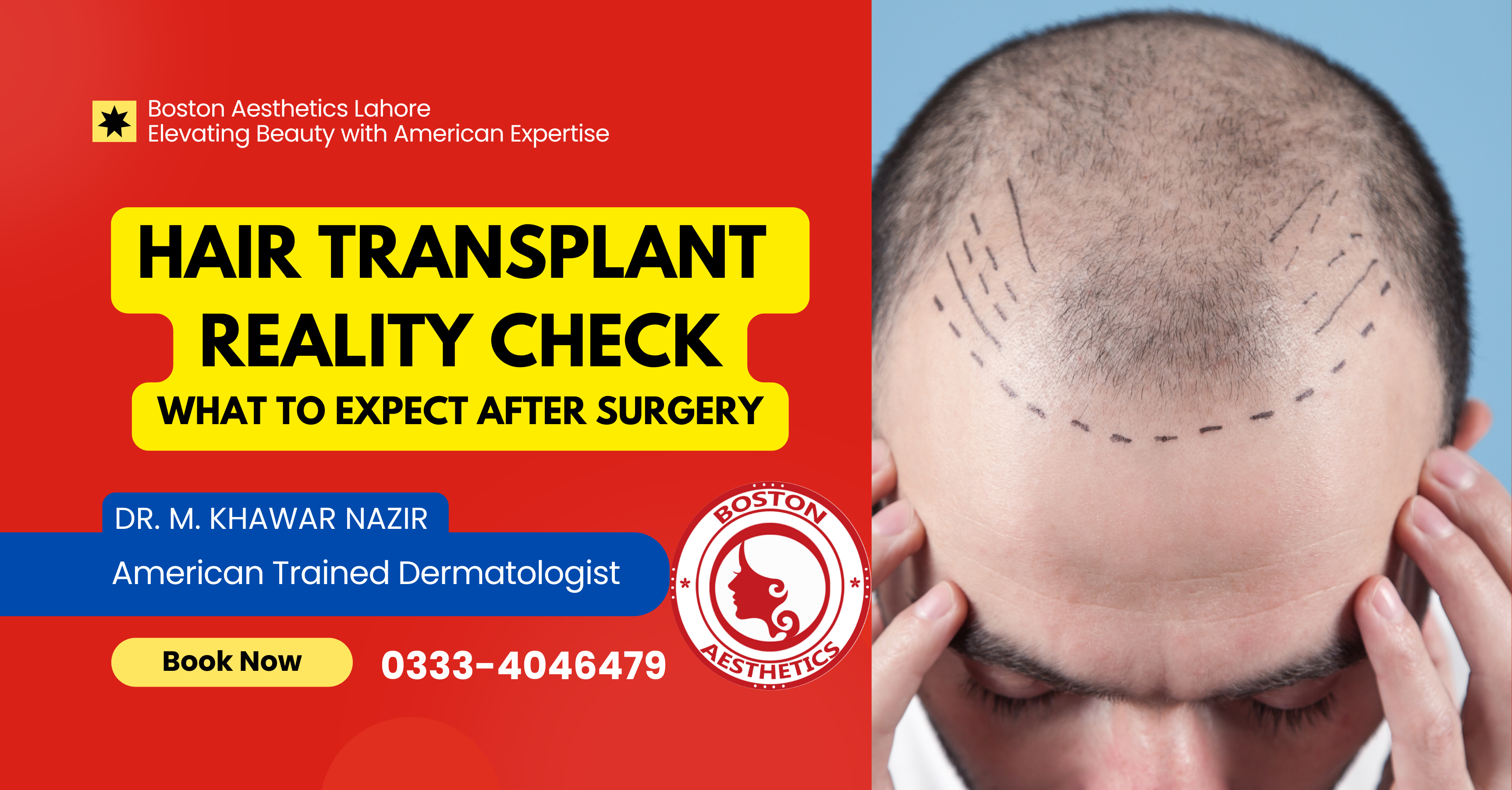
Unveiling the Truth: Realistic Hair Transplant Results vs. Marketing Hype
Introduction:
In Pakistan, hair transplant surgeries have become increasingly popular, largely driven by persuasive marketing campaigns that promise a quick fix for baldness. These campaigns often depict full, lush heads of hair as an easy and guaranteed outcome of the procedure. However, the reality of hair transplant surgery is much more complex, and it’s essential to set realistic expectations to avoid disappointment. At Boston Aesthetics, we prioritize patient education, ensuring that our clients understand the true potential and limitations of hair transplant procedures.
The Realistic Outcome of Hair Transplant Surgery
Hair transplant surgery is a medical procedure that involves extracting hair follicles from a donor area, typically the back or sides of the head, and implanting them into the balding or thinning areas. While this procedure can provide significant improvement in hair density, it is not a magic solution that can restore your hair to its original thickness.
The success of a hair transplant is influenced by several factors, including the availability of healthy donor hair, the extent of hair loss, and the expertise of the surgeon. Understanding these factors is crucial to having realistic expectations about the outcome of the surgery.



Understanding the Process of Hair Transplant
What Is Involved in the Surgery?
Hair transplant surgery is a meticulous process that requires a detailed understanding of hair growth patterns, density, and scalp health. During the procedure, the surgeon carefully removes hair follicles from the donor area and transplants them into the balding regions. This process is performed with precision to ensure that the implanted hair follicles blend naturally with the existing hair.
The Role of Donor Areas and Grafts
The success of the transplant largely depends on the availability of healthy hair follicles in the donor area. The number of grafts that can be transplanted is limited by the density of the donor hair, which means that individuals with extensive hair loss may not achieve the full coverage they desire. It’s important to discuss these limitations with your surgeon during the consultation.
Timeframe for Visible Results
One of the common misconceptions about hair transplants is that the results are immediate. In reality, it can take several months to a year for the transplanted hair to fully grow and blend with your natural hair. Patience is key, as the initial results may not reflect the final outcome.

Common Misconceptions Fueled by Marketing
Unrealistic Promises Made by Clinics
Many hair transplant clinics in Pakistan use aggressive marketing tactics to attract clients, often making exaggerated claims about the results. These advertisements may show before-and-after photos that do not represent typical outcomes, leading patients to have unrealistic expectations.
The Difference Between Reality and Exaggerated Outcomes
While hair transplants can significantly improve hair density and coverage, they cannot completely reverse baldness or create hair where none exists. The results are often subtle and natural-looking, rather than the dramatic transformation often portrayed in marketing materials.
- Infographics in dermatology
- Patient Awareness Campaigns on Steroid-Induced Dermatitis | Boston Aesthetics Lahore
- 5 Proven Ways to Calm Mind & Glow Skin in Lahore
- 5 Steps to Confident Nose Reshaping in Lahore
- 5 Shocking Truths About Lip Laser Rejuvenation
Limitations and Challenges of Hair Transplantation
Factors That Affect the Success of a Transplant
Several factors influence the success of a hair transplant, including the patient’s age, the progression of hair loss, and the quality of the donor hair. Individuals with extensive hair loss may require multiple sessions to achieve the desired results, and even then, complete coverage may not be possible.
The Limitations of Donor Hair
The number of hair follicles available for transplantation is limited by the density of the donor area. In cases where the donor hair is sparse, the results may be less dramatic. It’s important to understand that hair transplants can only redistribute existing hair; they cannot create new hair.
Case Studies or Statistics on Typical Results
Studies show that hair transplants are most effective in individuals with mild to moderate hair loss. In cases of advanced baldness, the results may be less satisfying, and patients should be prepared for this possibility.
The Importance of Consulting a Qualified Surgeon
How to Choose the Right Doctor for Hair Transplantation
Choosing a qualified and experienced surgeon is crucial to achieving the best possible results. At Boston Aesthetics, Dr. M. Khawar Nazir, an American-trained dermatologist, brings years of expertise and a deep understanding of hair restoration techniques to ensure patient satisfaction.
Risks of Going to Unqualified Practitioners
The rise of unlicensed and unqualified practitioners offering hair transplants at lower prices has led to an increase in unsatisfactory results and complications. It’s important to choose a reputable clinic with a proven track record of success.
Setting Realistic Expectations
What Patients Can Expect Post-Surgery
After the surgery, patients can expect some swelling, redness, and scabbing in the treated areas. These side effects are temporary and will subside within a few weeks. The transplanted hair will initially fall out, which is a normal part of the process, and new hair growth will begin within a few months.
Maintenance and Follow-Up Procedures
Hair transplants are not a one-time solution. Patients may require follow-up treatments and ongoing maintenance to preserve the results. This may include additional transplant sessions, medications, or non-surgical treatments to support hair growth.
Case Studies or Testimonials
Real-Life Examples of Patients with Realistic Results
At Boston Aesthetics, we have helped many patients achieve natural-looking results through hair transplant surgery. Our patients often express satisfaction with their improved appearance, although they acknowledge that the results are not as dramatic as some marketing campaigns suggest. These testimonials highlight the importance of having realistic expectations and trusting the expertise of a qualified surgeon.
Conclusion
Hair transplant surgery offers a viable solution for those struggling with hair loss, but it’s important to approach the procedure with realistic expectations. The results vary from person to person, and the success of the surgery depends on several factors, including the skill of the surgeon, the quality of the donor hair, and the patient’s individual hair loss pattern.
At Boston Aesthetics, we believe in providing honest, transparent information to our patients. Dr. M. Khawar Nazir, with his extensive training and experience, ensures that each patient receives personalized care and achieves the best possible outcome.
FAQs
- Can I achieve a full head of hair with a transplant?
- Hair transplants can significantly improve hair density, but achieving a full head of hair may not be possible, especially in cases of extensive hair loss.
- How long do hair transplants last?
- The results of a hair transplant can last a lifetime with proper care and maintenance, although some patients may require follow-up treatments.
- What are the risks associated with hair transplants?
- Like any surgical procedure, hair transplants carry some risks, including infection, scarring, and unsatisfactory results if performed by an unqualified practitioner.
- Is hair transplant surgery painful?
- The procedure is performed under local anesthesia, so patients do not feel pain during the surgery. Some discomfort may be experienced during the recovery period.
- How much does a hair transplant cost?
- The cost of a hair transplant varies depending on the extent of hair loss, the number of grafts required, and the clinic’s reputation. It’s important to choose a qualified surgeon to ensure the best results.

Leave a Reply