
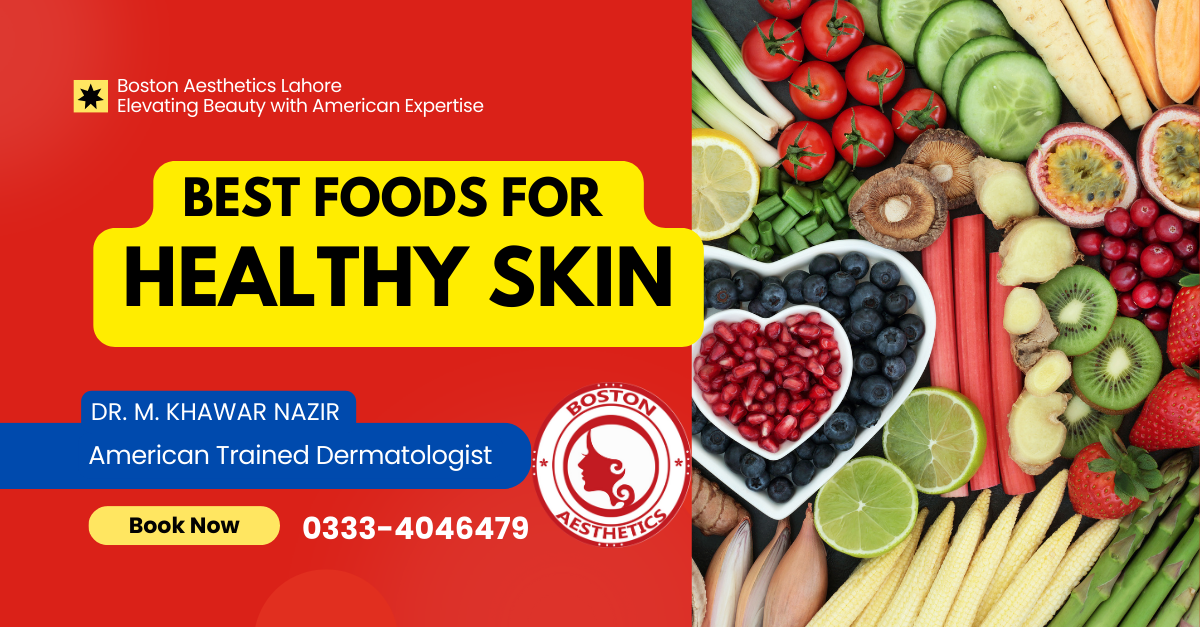
Discover the Best Foods for Healthy Skin with Dr. M. Khawar Nazir
Introduction
Nutrition plays a crucial role in maintaining healthy skin. What you eat directly affects your skin’s appearance and health. Dr. M. Khawar Nazir, an American-trained dermatologist at Boston Aesthetics Lahore, emphasizes the importance of a balanced diet for skin health. This blog post explores how diet affects skin health, recommends skin-friendly foods, and answers common questions related to nutrition and skin care.
How Diet Affects Skin Health
The Connection Between Diet and Skin
Your skin is a reflection of your overall health. A balanced diet provides the essential nutrients needed for skin repair, hydration, and protection against environmental damage. Poor dietary choices can lead to various skin problems, including acne, premature aging, and dullness.
Key Nutrients for Healthy Skin
- Vitamins
- Vitamin A: Promotes cell turnover and reduces acne.
- Vitamin C: Boosts collagen production and brightens skin.
- Vitamin E: Protects against oxidative damage and supports skin repair.
- Minerals
- Zinc: Reduces inflammation and helps with acne.
- Selenium: Protects skin cells from damage.
- Antioxidants
- Found in fruits and vegetables, antioxidants protect the skin from free radical damage.
- Omega-3 Fatty Acids
- Found in fish, flaxseeds, and walnuts, omega-3s reduce inflammation and keep the skin moisturized.
Skin-Friendly Foods
Fruits and Vegetables
- Berries: Rich in antioxidants, berries help protect skin from damage.
- Citrus Fruits: High in vitamin C, they boost collagen production.
- Leafy Greens: Packed with vitamins and minerals that support skin health.
Healthy Fats
- Avocados: Contain healthy fats and vitamin E, which keep skin moisturized.
- Nuts and Seeds: Provide essential fatty acids and antioxidants.
Proteins
- Lean Meats: Supply amino acids for collagen production.
- Fish: High in omega-3 fatty acids, which reduce inflammation.
Whole Grains
- Provide essential B vitamins and fiber, supporting overall skin health.
Foods High in Omega-3 Fatty Acids
- Salmon: Reduces inflammation and keeps the skin moisturized.
- Chia Seeds: Provide omega-3s and fiber, supporting overall skin health.
Diet Tips for Specific Skin Concerns
Acne-Prone Skin
- Avoid sugary foods and dairy products, which can trigger acne.
- Include foods rich in zinc, like pumpkin seeds and chickpeas.
Aging Skin
- Eat foods high in antioxidants and vitamin C, like citrus fruits and berries.
- Include lean proteins to support collagen production.
Dry Skin
- Consume foods rich in healthy fats, like avocados and nuts.
- Drink plenty of water and include hydrating foods in your diet.
Sensitive Skin
- Avoid spicy foods and alcohol, which can trigger inflammation.
- Include anti-inflammatory foods like turmeric and green tea.
Frequently Asked Questions (FAQs)
1. Can Diet Alone Improve My Skin?
While diet plays a crucial role, it should be complemented with a good skincare routine for the best results.
2. How Long Does It Take to See Improvements in My Skin?
Changes in diet can take a few weeks to show noticeable improvements in your skin.
3. Are There Any Foods to Avoid for Healthy Skin?
Avoid processed foods, sugary snacks, and excessive dairy intake, as they can trigger skin issues.
4. How Much Water Should I Drink for Healthy Skin?
Aim for at least 8 glasses of water a day to keep your skin hydrated.
5. Can Supplements Help My Skin?
Supplements can be beneficial, but it’s best to get nutrients from whole foods. Consult with a healthcare provider before taking any supplements.
Conclusion
The role of nutrition in maintaining healthy skin cannot be overstated. A balanced diet rich in vitamins, minerals, antioxidants, and healthy fats is essential for radiant skin. By incorporating skin-friendly foods into your diet and avoiding processed foods, you can achieve a glowing complexion. For personalized skincare advice, schedule a consultation with Dr. M. Khawar Nazir at Boston Aesthetics Lahore.
Enhance Your Skin Health with Expert Advice
Book a consultation with Dr. M. Khawar Nazir, the best dermatologist in Lahore, to learn more about the role of nutrition in healthy skin. Contact us at +92-333-4046479 or visit our website Boston Aesthetics Lahore to schedule your consultation.
Leave a Reply