
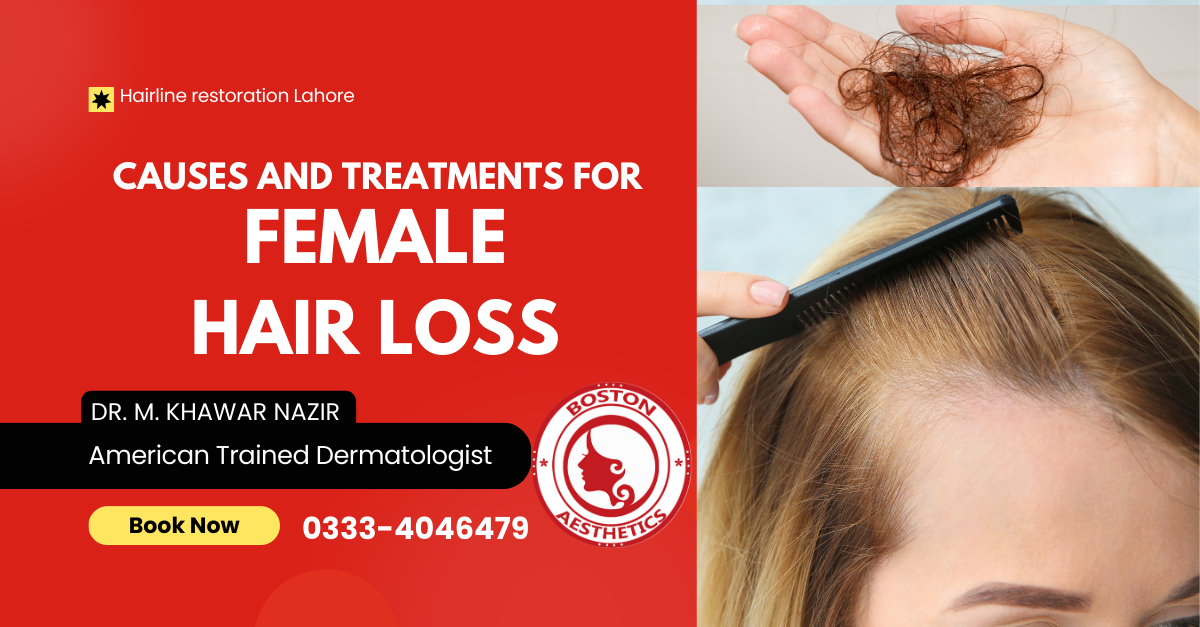
Common Reasons of Hair Fall in Females and Their Management Options
Introduction
Hair loss can be distressing, especially for women who take pride in their appearance. Understanding the common causes and effective management options is crucial for maintaining healthy hair. At Boston Aesthetics Lahore, we provide expert care tailored to your needs.
In this insightful podcast episode, Dr. M. Khawar Nazir, an esteemed American-trained dermatologist, delves into the prevalent causes of hair loss and explores the latest, most effective treatment options. Listen in to gain valuable knowledge on how to manage and treat hair loss, guided by expert advice from a leading specialist in the field.
Common Causes of Hair Fall in Females
1. Hormonal Changes
Hormonal fluctuations due to pregnancy, menopause, or thyroid issues can lead to significant hair loss. Conditions like polycystic ovary syndrome (PCOS) also affect hair health.
2. Nutritional Deficiencies
A lack of essential nutrients such as iron, vitamin D, and biotin can weaken hair, causing it to fall out. Maintaining a balanced diet is key to healthy hair growth.
3. Stress
High stress levels can trigger hair loss through a condition known as telogen effluvium, where hair prematurely enters the resting phase and falls out.
4. Hairstyles and Treatments
Frequent use of heat styling tools, chemical treatments, and tight hairstyles can damage hair follicles, leading to hair loss over time.
5. Medical Conditions
Autoimmune diseases such as alopecia areata and scalp infections can result in patchy hair loss.
6. Genetics
Androgenetic alopecia, a hereditary condition, is one of the most common causes of hair loss in women, leading to thinning hair on the crown and front of the scalp.
Management Options
1. Healthy Diet and Supplements
Ensure your diet is rich in essential vitamins and minerals. Consider supplements like biotin, iron, and vitamin D to support hair health.
2. Stress Management
Incorporate stress-relieving practices such as yoga, meditation, and regular exercise into your routine to reduce hair loss caused by stress.
3. Gentle Hair Care
Avoid excessive heat styling and chemical treatments. Opt for gentle shampoos and conditioners, and use a wide-tooth comb to minimize hair breakage.
4. Laser Therapy
Low-level laser therapy (LLLT) can stimulate hair follicles, promoting hair growth and improving hair density. This non-invasive treatment is effective and safe for most women.
5. Hair Transplant Surgery
For more advanced hair loss, hair transplant surgery can be a viable option. Follicles from a healthy donor area are transplanted to thinning or balding areas, providing natural and permanent results.

FAQs About Hair Loss in Females
- Can hair loss be reversed?
- Yes, with early intervention and the right treatments, hair loss can often be managed or reversed.
- Is hair loss more common in certain age groups?
- Hair loss can affect women of all ages, but it is more common after menopause due to hormonal changes.
- Are there any side effects of hair transplant surgery?
- Side effects are minimal and may include temporary swelling and redness. Following post-surgery care guidelines ensures optimal results.
Detailed Management Options
1. Healthy Diet and Supplements
A nutritious diet is essential for healthy hair. Foods rich in vitamins and minerals, such as leafy greens, nuts, and fish, support hair health. Supplements can help fill any nutritional gaps.
2. Stress Management
Chronic stress can lead to hair loss. Stress management techniques like mindfulness meditation, deep breathing exercises, and physical activities can reduce stress levels and improve overall health.
3. Gentle Hair Care
Avoid harsh hair treatments and products that can damage hair. Use sulfate-free shampoos and conditioners that are gentle on the scalp. Limit the use of heat styling tools and always use a heat protectant spray.
4. Laser Therapy
Laser therapy stimulates hair follicles and encourages new hair growth. It is a painless and non-invasive treatment that can be done in-office or with at-home devices. Regular sessions are required for best results.
5. Hair Transplant Surgery
Hair transplant surgery involves transplanting hair follicles from a donor area (usually the back of the scalp) to the thinning or balding areas. It provides natural-looking and permanent results. The procedure is minimally invasive, and recovery time is short.
Conclusion
Hair loss can be managed effectively with the right approach. At Boston Aesthetics Lahore, Dr. M. Khawar Nazir offers personalized treatments to help you regain your hair and confidence.
Book Your Consultation Today Experience expert care for hair loss at Boston Aesthetics Lahore. Contact us at +92-333-4046479 to schedule your consultation with Dr. M. Khawar Nazir.
Leave a Reply