

Chemical Peeling: Unveil Your Best Skin Yet
By Dr. M. Khawar Nazir (MBBS, MSc. Dermatology, Boston University, USA | American Trained Dermatologist)
Introduction
Are you tired of dealing with dull, damaged, or uneven skin? Chemical peeling might be your ticket to rejuvenated, radiant skin. Let’s explore this transformative skincare procedure and why it could be the right option for you.
What is Chemical Peeling?
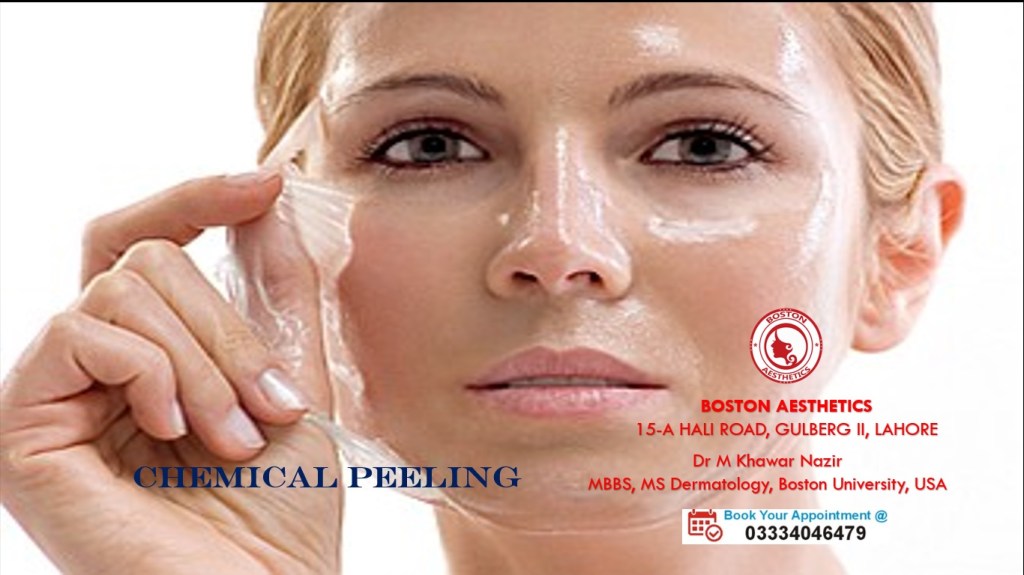
Chemical peeling is a dermatological procedure that employs a chemical solution to exfoliate and remove damaged skin layers, revealing healthier, more youthful skin beneath.
This can improve the appearance of the skin by reducing wrinkles, age spots, acne scars, and other blemishes.
How does Chemical Peeling Work?
Chemical peeling works by dissolving the dead skin cells on the surface of the skin. This exposes the fresh, new skin cells underneath. The deeper the peel, the more skin cells are removed.
Types of Chemical Peels
There are different types of chemical peels, each with its own level of depth. The most common types of chemical peels are:
- Superficial peels: These peels remove the outermost layer of skin. They are typically used to treat mild skin problems, such as sun damage and age spots.
- Medium peels: These peels remove the outer layer of skin and some of the deeper layers. They are typically used to treat moderate skin problems, such as acne scars and wrinkles.
- Deep peels: These peels remove the outer layer of skin and all of the deeper layers. They are typically used to treat severe skin problems, such as severe acne scars and wrinkles.
Indications for Chemical Peeling
- Acne or acne scars
- Age and liver spots
- Fine lines and wrinkles
- Uneven skin tone or redness
- Sun-damaged skin
- Keratosis Pilaris
- Warts
TCA CROSS Peel for Acne Scars
TCA CROSS peel is a type of deep chemical peel that can be used to treat acne scars. TCA stands for trichloroacetic acid, which is the main ingredient in this peel. CROSS stands Chemical Reconstruction Of Skin Scars, which is a technique that is used to enhance the results of the peel.
It involves the application of a high concentration of Trichloroacetic Acid (TCA) to the deep portions of the ice pick scar using a fine instrument like a toothpick or a needle.
The high concentration of TCA causes localized damage, promoting a controlled inflammatory response. This in turn stimulates collagen production and skin tightening, which effectively lifts the base of the ice-pick scar towards the surface of the skin. The newly formed collagen helps to fill the scar depression, making the scar less deep and more even with the surrounding skin.
Multiple sessions may be required for optimal results, and it is crucial to have this procedure done by an experienced dermatologist to minimize risks and ensure the best outcome.

Number of Sessions Required
The number of sessions can vary based on your skin’s needs and the type of peel. Generally, 4-6 sessions are recommended for noticeable results.
Post-Procedure Care
- Avoid sun exposure
- Use a high SPF sunscreen
- Keep the skin hydrated
- Avoid heavy makeup for a few days
- Avoid picking or scratching the skin
Expected Downtime for Chmeical Peeling in Asian Skin
Superficial Chemical Peels: Downtime is minimal for superficial chemical peels. Patients may experience mild redness and slight flaking or peeling for 1 to 3 days post-procedure. You can typically return to your regular skincare routine and daily activities immediately.
Medium-Depth Chemical Peels: For medium-depth chemical peels, expect a downtime of approximately 7 to 14 days. The skin may initially appear red and swollen and will likely peel for several days. It’s advisable to limit sun exposure and follow a specific skincare regimen during this period for optimal results.
Outcome and Prognosis
Results are typically excellent but can vary based on skin type and issue being treated. Repeated sessions may be necessary for sustained results.
Why Choose a Dermatology Office?
Chemical peeling should only be performed by a qualified dermatologist. This is because there is a risk of side effects if the peel is not done correctly. A dermatologist can also help you choose the right type of peel for your skin and ensure that you get the best possible results.

Unlocking Affordable Beauty: Understanding the Costs of Chemical Peeling at Boston Aesthetics
Chemical peeling is often more cost-effective compared to other cosmetic procedures. The pricing structure varies depending on several factors: the specific type of chemical peel employed, the treatment area (e.g., face, back, hands, feet), and the intended results (e.g., addressing pigmentation, scars, or anti-aging). Fees may start at 3000 PKR per session, with adjustments made based on the scope and type of the treatment. Final costs are established following a thorough patient evaluation and consultation.
Conclusion
Chemical peeling is a versatile procedure offering various benefits, from treating acne scars to rejuvenating aging skin. Make sure you get your treatment from an expert dermatologist for the best outcomes.
Ready to unveil rejuvenated, radiant skin? Don’t leave your skin’s health to chance. Trust the expertise of Dr. M. Khawar Nazir at Boston Aesthetics to guide you through the transformative journey of chemical peeling. Schedule your personalized consultation today at Boston Aesthetics, 15-A, Hali Road, Gulberg II, Lahore, and take the first step towards a more confident you.
Boston Aesthetics
15-A, Hali Road, Gulberg II, Lahore
Call/ What’s app 03334046479
Online Video Consultation available as well
Leave a Reply