
Unlocking the Secrets to Acne Management: A Comprehensive Guide
By Dr. M. Khawar Nazir, MBBS, MSc Dermatology, Boston University, USA | American Trained Dermatologist
Introduction
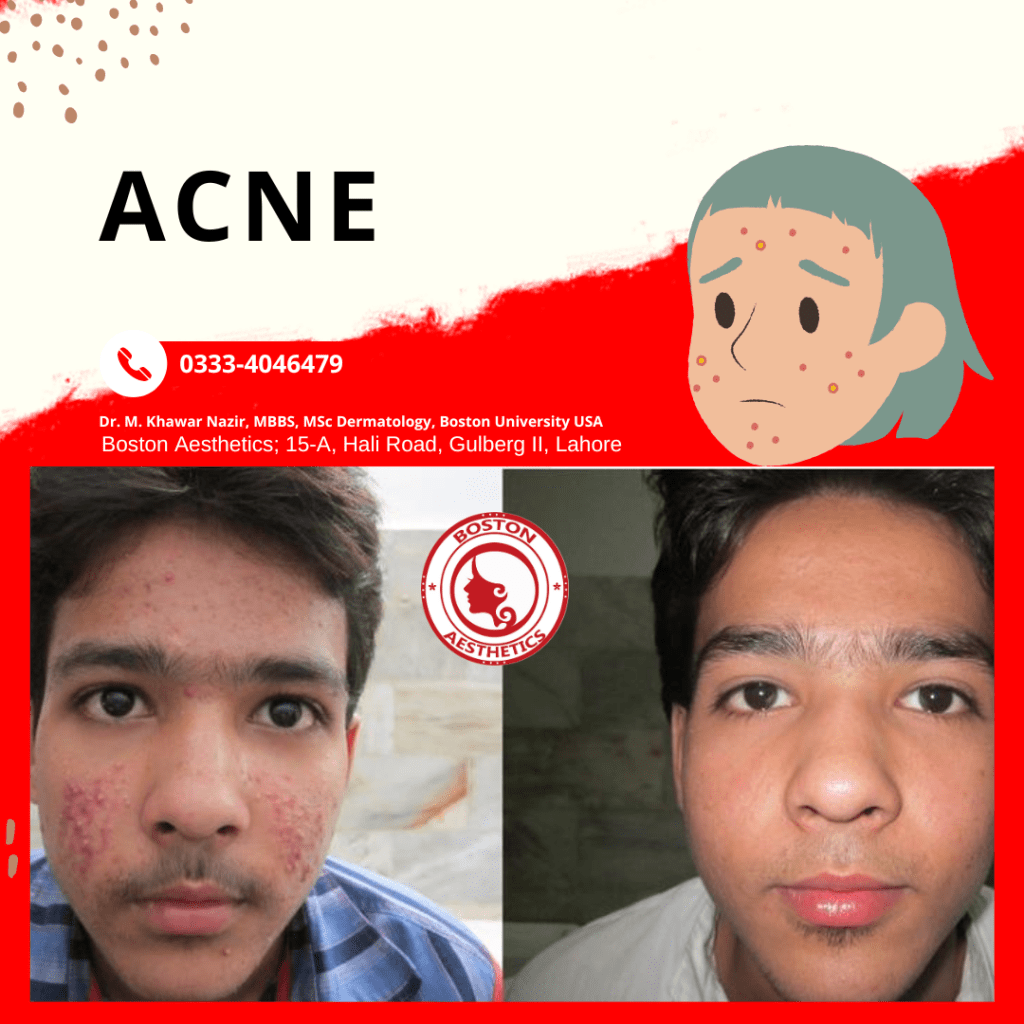
Acne is not just a teenage issue; it’s a skin condition that spans all age groups and affects millions globally. The journey to clear skin can often feel like a maze. As a dermatologist, I see the toll acne takes on self-esteem, and I aim to provide you with valuable insights into the condition and how you can regain control over your skin.
Symptoms of Acne: More than Just Pimples
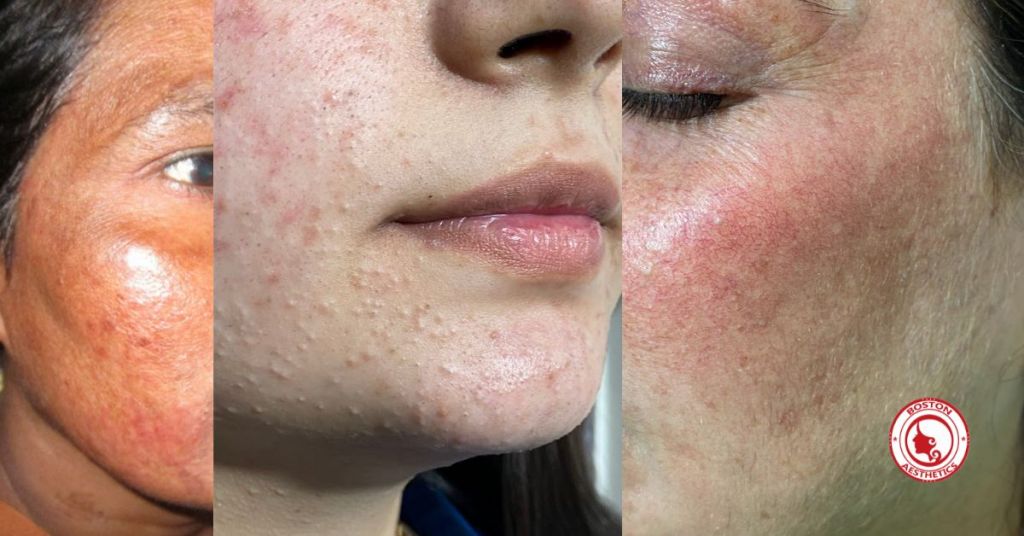
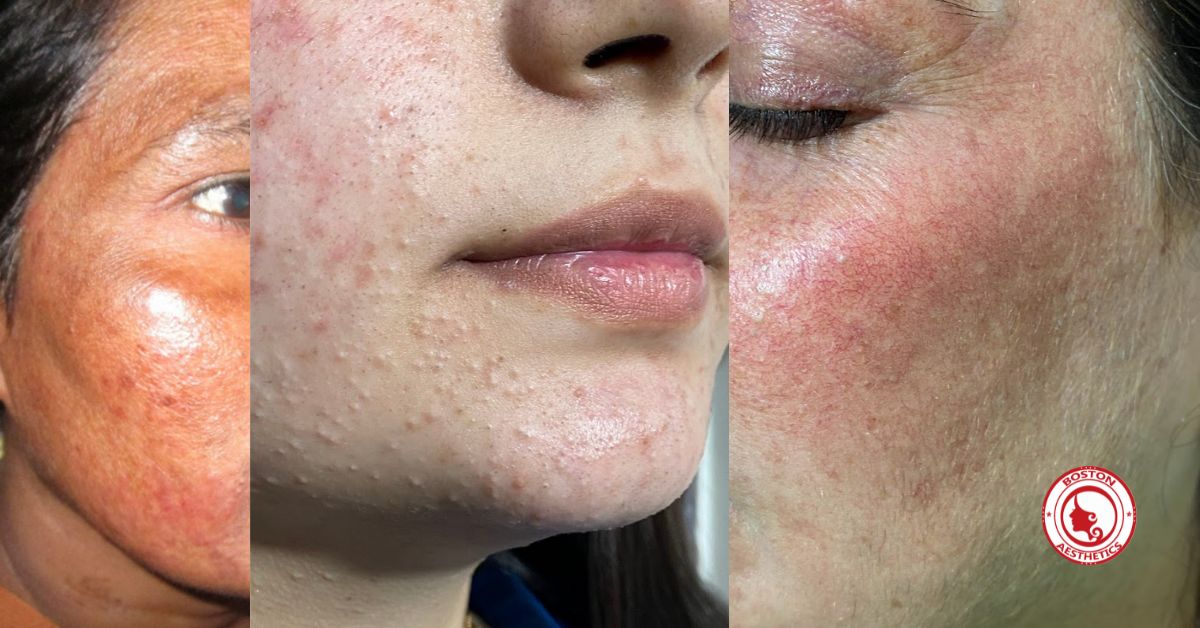
While acne primarily presents as pimples, its symptomatology is diverse. Varying from mild to severe forms, acne can manifest as:
- Whiteheahs
- Blackheads
- Comedones
- Pimples (Papules)
- Pustules (Pus filled pimples)
- Nodules
- Cysts
- Potential Scarring


Decoding the Causes of Acne
The exact etiology remains elusive, but we do know that several key factors contribute to acne:
- Excessive Oil Production: Overactive sebaceous glands can lead to pore clogging.
- Bacterial Involvement: Propionibacterium acnes (P. acnes) is commonly found on the skin but can contribute to inflammation when it overmultiplies.
- Inflammation: An immune response against clogged pores often exacerbates the condition.
Who’s at Risk? Identifying Contributing Factors
Anyone can develop acne, but some are more predisposed due to:
- Age: Predominantly affects adolescents but can persist or even start in adulthood.
- Gender: Generally more common among males.
- Genetic Factors: A family history can increase your risk.
- Hormonal Changes: Hormonal fluctuations during life events like puberty and pregnancy can be triggers.
- Medications: Certain drugs such as steroids and lithium can induce acne.
- Stress: Mental stress can cause flare-ups.
- Dietary Choices: Specific foods like dairy and high glycemic foods may exacerbate acne in some individuals.

Customized Acne Treatment Solutions
A cookie-cutter approach to acne simply doesn’t work. Treatments are tailored to individual needs and may include:
- Topical Agents: Such as benzoyl peroxide, salicylic acid, and retinoids.
- Oral Medications: Antibiotics or isotretinoin for more severe cases.
- Advanced Procedures: Laser therapy and chemical peels for acne scars.
The Road to Clear Skin: Practical Tips
While undergoing treatment, consider these skin-care practices:
- Opt for a gentle cleanser, cleansing twice daily.
- Avoid incessant face-touching.
- Choose oil-free make-up and sunscreen.
- Adopt a balanced diet and stay hydrated.
- Prioritize sleep and stress management.
Additional Resources
For further reading, consult the following scholarly articles and studies:
- “Pathogenesis, clinical manifestations and diagnosis of acne vulgaris” – New England Journal of Medicine.
- “Dietary water affects human skin hydration and biomechanics” – Clinical, Cosmetic and Investigational Dermatology.
- Infographics in dermatology
- Patient Awareness Campaigns on Steroid-Induced Dermatitis | Boston Aesthetics Lahore
- 5 Proven Ways to Calm Mind & Glow Skin in Lahore
- 5 Steps to Confident Nose Reshaping in Lahore
- 5 Shocking Truths About Lip Laser Rejuvenation
Common Questions About Acne:
- Does acne only affect teenagers?
- No, it can occur at any age.
- Can diet influence acne?
- Yes, some foods may trigger acne in certain individuals.
- Are there permanent solutions for acne scars?
- Procedures like laser treatment can offer long-term results for scarring.

Take the First Step: Consult a Dermatologist
Navigating acne can be daunting, but you don’t have to go through it alone. If you’re grappling with acne and its impacts, it’s time to consult a specialist. Schedule your appointment with me at Boston Aesthetics and begin your journey to clearer, healthier skin today.
Boston Aesthetics 15-A, Hali Road, Gulberg II, Lahore Phone: 0333-4046479
Put an end to your acne struggles; take action now for better skin tomorrow!

Leave a Reply