
Is BS Dermatology Enough to Practice in Pakistan?
Blog Post by Dr. M. Khawar Nazir | American Trained Dermatologist from Boston University, USA
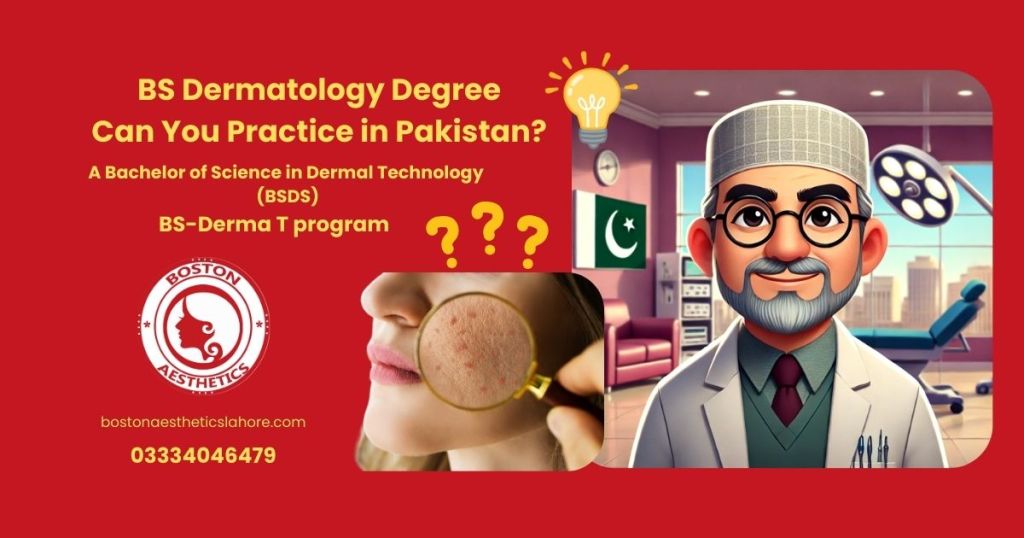
The landscape of dermatology education in Pakistan is rapidly evolving, sparking heated debates and widespread confusion among aspiring dermatologists and the general public. With the rise of BS Dermatology and BS Dermal Technology programs, many wonder: “BS Dermatology Degree: Can You Practice in Pakistan?”—or is it just a misleading alternative to the traditional MBBS pathway?
For passionate individuals drawn to skincare, aesthetics, and medical dermatology, choosing the right path is crucial. While the BS Dermatology degree provides valuable foundational knowledge, it does not hold the same medical authority as an MBBS, which remains the gold standard for becoming a licensed dermatologist. Unfortunately, many students fall into the trap of misinformation, believing a BS degree alone can replace the rigorous MBBS and postgraduate pathways (FCPS, MCPS, MSc, MD).
In this eye-opening blog, Dr. M. Khawar Nazir, an American-Trained Dermatologist at Boston Aesthetics, 15-A, Hali Road, Gulberg II, Lahore, breaks the silence on the truth behind dermatology qualifications in Pakistan. We’ll cut through the confusion, uncover career opportunities, and address the pressing question: “BS Dermatology Degree: Can You Practice in Pakistan?”—or is this just another misguided shortcut?
🚀 Stay informed before making a life-changing career decision!

By the end of this post, you’ll gain clarity on:
- Who can practice as a dermatologist in Pakistan?
- The educational journey and qualifications required for licensed dermatology practice.
- Career options for BS Dermatology graduates, including roles as dermatology assistants, technicians, and skincare specialists.
Join us as we break down this complex topic in simple and easy-to-understand language to ensure you’re well-informed about your career choices and dermatology services in Pakistan.
Stay informed and choose the right path to pursue your passion for skin care and aesthetics.
Table of Contents

Legality and Recognition
- PMDC Recognition: Perhaps the most significant factor is whether the Pakistan Medical and Dental Council (PMDC), recognizes this degree. Without this essential recognition, the possibility of practicing dermatology in Pakistan remains a question mark. Please visit & contact PMDC official website for further information https://pmdc.pk/
- Scope of Practice: Even if PMDC does offer recognition, what will the scope of practice be for these BS Dermatology graduates? Given the complexities involved in dermatological practice, it’s worth questioning how broad or limited this scope could be.
- Public Perception: How does the medical community and the general public perceive these graduates? Traditionally, dermatologists with an MBBS degree and specialized training have enjoyed a greater level of trust.
SUMMARY
Understanding BS Dermatology:
A BS in Dermatology is a 4-year undergraduate degree focused on basic dermatological sciences. It provides foundational knowledge but does not qualify graduates as independent dermatologists in Pakistan.
Eligibility to Practice as a Dermatologist:
To practice as a dermatologist in Pakistan, one must complete an MBBS degree, followed by a house job and postgraduate specialization in dermatology (e.g., FCPS, MCPS, MSc, MD, or Diploma in Dermatology).
Legal and Ethical Requirements:
The Pakistan Medical and Dental Council (PMDC) mandates a recognized medical degree and registration for practicing dermatology. A BS in Dermatology alone does not meet these criteria.
Career Options with a BS in Dermatology:
Graduates can pursue roles in dermatology labs, research, or as technicians assisting certified dermatologists. They can also further their education to specialize in dermatology.
Public Awareness and Choosing Experts:
Patients should verify their dermatologist’s credentials to ensure they are consulting a certified and licensed practitioner to avoid potential risks and complications.
Academic Rigor
- Depth of Training: Dermatology isn’t just about treating skin conditions; it often intersects with systemic diseases. Traditional MBBS courses provide a broader medical education, which may be crucial for a more comprehensive understanding of dermatology.
- Global Recognition: Another aspect to consider is how a BS Dermatology degree from Pakistan would be viewed internationally. Will it hold up to the standards expected in countries where an MBBS is the minimum requirement?
Table of key differences between BS Dermal Technology and Dermatologist
| Aspect | BS Dermal Technology | Dermatologist (MBBS + Specialization) |
|---|---|---|
| Duration | FSc + 4 years | FSc + 5 years MBBS + 1 Year House Job + several years of postgraduate training |
| Focus | Training in skincare, cosmetic sciences, and assisting dermatologists | Medical and surgical treatment of skin, hair, and nail disorders |
| Career Paths | Cosmetic scientist, cosmetologist, physician associate, educator, and researcher | Licensed medical doctor specializing in dermatology |
| Eligibility | Intermediate Pre-Medical with minimum 50% marks or equivalent | Completion of MBBS and postgraduate specialization in dermatology |
| Title | Cannot use the title of “Doctor” | Licensed to use the title of “Doctor” |
| Role | Dermatology assistants or technicians under supervision | Independent practice as a dermatologist |
This table provides a clear comparison to differentiate between the two professions effectively.

Career Prospects
- Job Opportunities: One of the biggest concerns is the employability factor. How marketable are you after completing a BS in Dermatology?
- Further Training: Will this degree allow you to proceed to more advanced dermatology training or certification programs? Or will it limit your career growth?


BS Dermatology in Pakistan: Answers to Common Questions and Misconceptions
1. Is BS Dermatology equivalent to an MBBS-based Dermatology Degree?
No, BS Dermatology is not equivalent to an MBBS-based dermatology qualification. The Bachelor of Science (BS) in Dermatology is a 4-year undergraduate program that provides basic theoretical knowledge and skills related to dermatology. However, it is not a medical degree and does not offer the depth of clinical education, training, and practice that comes with an MBBS (Bachelor of Medicine and Bachelor of Surgery) program.
To practice as a qualified dermatologist, one must first complete an MBBS, followed by a postgraduate specialization such as MCPS, FCPS, MD, or equivalent in dermatology. Therefore, individuals with a BS Dermatology degree cannot practice dermatology independently or prescribe medicines.
2. Can I practice internationally with a BS Dermatology degree from Pakistan?
Practicing internationally with a BS Dermatology degree largely depends on the specific licensing requirements of the country you are considering.
- In most countries, a dermatology license is granted to individuals with an MBBS degree or equivalent medical qualifications.
- A BS Dermatology degree may only be recognized as a paramedical or supportive role in dermatology, such as an assistant or technician in dermatological clinics.
Therefore, an MBBS degree followed by a recognized postgraduate dermatology program is universally accepted for practicing dermatology internationally.

3. What is the duration of the BS Dermatology program?
The BS Dermatology program typically spans 4 years after completing FSc (Pre-Medical) or equivalent.
During these 4 years, students study foundational dermatology concepts, anatomy, physiology, and practical skills for supportive roles in dermatology clinics, such as assisting dermatologists in procedures or managing dermatology-related equipment.
4. Can I do BS in Dermatology in Pakistan?
Yes, BS Dermatology is offered by several universities and institutes in Pakistan. Students can enroll in this program after completing FSc Pre-Medical with the required marks.
This degree primarily focuses on:
- Basic dermatology concepts
- Skin diseases
- Diagnostic techniques
- Clinical procedures (in supportive roles)
- Dermatology laboratory management
However, as emphasized, BS Dermatology is not a substitute for an MBBS degree and does not lead to independent practice as a dermatologist.
5. Is BS Dermatology called a doctor?
No, individuals who complete BS Dermatology cannot use the title of “Doctor”.
The title of “Doctor” is reserved for those who complete:
- MBBS (Bachelor of Medicine, Bachelor of Surgery)
- BDS (Bachelor of Dental Surgery)
- Other doctoral or medical degrees.
BS Dermatology graduates may work as dermatology assistants or technicians under the supervision of qualified dermatologists but cannot claim the title of a doctor.
6. How many marks are required for BS Dermatology in Pakistan?
Admission requirements may vary depending on the institution. However, in general:
- A minimum of 50-60% marks in FSc Pre-Medical is required.
- Some universities may require entry test scores for eligibility.
It is advisable to check with specific universities regarding their admission criteria for BS Dermatology.
7. What is the salary after BS Dermatology in Pakistan?
The salary after completing BS Dermatology depends on the role and institution where one is employed. On average:
- Entry-level positions such as dermatology assistants or technicians may earn PKR 30,000 – 50,000 per month.
- With experience, this can increase to PKR 60,000 – 100,000 per month.
However, the earning potential of a qualified dermatologist with an MBBS and specialization is significantly higher, often exceeding PKR 200,000 – 500,000 per month depending on experience and reputation.
8. Is MDCAT necessary for dermatology?
If you want to pursue MBBS and later specialize in dermatology, then MDCAT (Medical and Dental College Admission Test) is mandatory.
For a BS Dermatology program, MDCAT is usually not required. Admission is generally based on FSc Pre-Medical marks and university-specific criteria.
9. What is the lowest salary for a dermatologist?
The lowest salary for a qualified dermatologist (MBBS + specialization) in Pakistan typically starts at around PKR 100,000 per month. This can vary based on:
- Location (urban vs. rural)
- Employer (public hospital, private clinic, or independent practice)
For BS Dermatology graduates, the starting salaries are significantly lower, usually in the range of PKR 25,000 – 40,000 per month.
10. How to Become a Dermatologist in Pakistan?
To become a qualified dermatologist in Pakistan, you must follow these steps:
- Complete FSc Pre-Medical with excellent grades.
- Pass MDCAT and secure admission to an MBBS program (5 years).
- Complete a 1-year house job in a recognized teaching hospital.
- Pursue postgraduate specialization in dermatology, such as:
- FCPS Dermatology (College of Physicians and Surgeons Pakistan)
- MD Dermatology (University-based programs)
- MCPS Dermatology (shorter specialization option)
- Obtain a license to practice from the Pakistan Medical Commission (PMC).
After completing these steps, you can officially practice as a dermatologist in Pakistan.
- Infographics in dermatology
- Patient Awareness Campaigns on Steroid-Induced Dermatitis | Boston Aesthetics Lahore
- 5 Proven Ways to Calm Mind & Glow Skin in Lahore
- 5 Steps to Confident Nose Reshaping in Lahore
- 5 Shocking Truths About Lip Laser Rejuvenation
Additional Common Questions for Public Awareness
What is the difference between BS Dermatology and a Dermatologist?
- BS Dermatology: A supportive undergraduate degree offering basic dermatology knowledge.
- Dermatologist: A qualified medical doctor who completes MBBS and a postgraduate specialization in dermatology.
Can BS Dermatology graduates prescribe medicine?
No, BS Dermatology graduates cannot prescribe medicines or treat patients independently. They can only assist licensed dermatologists.
Can BS Dermatology lead to a specialization?
No, BS Dermatology does not lead to postgraduate specialization. Specialization requires an MBBS degree followed by postgraduate training.
BS Dermatology Fee Structure at The University of Faisalabad
The University of Faisalabad (TUF) offers a BS Dermal Technology program, commonly referred to as BS Dermatology. This undergraduate degree spans eight semesters over four years.
Fee Breakdown per Semester:
- Enrollment Fee: PKR 12,000
- Examination Fee: PKR 12,000
- Tuition Fee: PKR 201,000
- Total per Semester: PKR 225,000
Over the entire program, the cumulative cost amounts to approximately PKR 1,800,000.
Scholarship Opportunities:
TUF provides merit-based scholarships to support students financially:
- Board Position Holders: 100% tuition fee waiver
- Students with 90% or Above Marks: 20% tuition fee reduction
- Students with 80% to 89.99% Marks: 10% tuition fee reduction
These scholarships are awarded based on academic performance in intermediate examinations.
Additional Considerations:
- Annual Fee Adjustments: TUF may implement an annual tuition fee increase of up to 3% to account for inflation.
- Miscellaneous Expenses: Students should budget for additional costs such as study materials, lab equipment, and other hostel accomodation related expenses.
For the most current information and any potential updates to the fee structure, prospective students are encouraged to consult the official TUF website or contact the admissions office directly.
Understanding BS Dermal Technology at The University of Faisalabad
The BS Dermal Technology program at The University of Faisalabad (TUF) is a four-year undergraduate degree focusing on skin health and non-invasive cosmetic procedures. This program is distinct from the path to becoming a dermatologist, which requires completing an MBBS degree followed by postgraduate specialization in dermatology.
Key Differences:
- BS Dermal Technology:
- Duration: 4 years
- Focus: Training in skincare, cosmetic sciences, and assisting dermatologists.
- Career Paths: Cosmetic scientist, cosmetologist, physician associate, educator, and researcher.
- Eligibility: Intermediate Pre-Medical with minimum 50% marks or equivalent.
- Dermatologist (MBBS + Specialization):
- Duration: 5 years of MBBS + several years of postgraduate training.
- Focus: Medical and surgical treatment of skin, hair, and nail disorders.
- Career Path: Licensed medical doctor specializing in dermatology.
- Eligibility: Completion of MBBS and postgraduate specialization in dermatology.
It’s essential for prospective students to recognize that while both fields pertain to skin health, the BS Dermal Technology degree does not qualify one to practice as a dermatologist. Instead, graduates can work alongside dermatologists, contribute to the cosmetic industry, or engage in skincare research and education.
For detailed information on the BS Dermal Technology program, including curriculum and admission requirements, please visit TUF’s official page:
Many aspiring dermatologists dream of a prestigious, high-earning career, but the long, grueling journey of MBBS, FCPS, MCPS, MSc or MD feels overwhelming and exhausting. The BS Dermatology Degree: Can You Practice in Pakistan? question arises because students desperately seek a shortcut—a way to bypass the years of rigorous medical training and still achieve success. The promise of a faster, easier route is tempting, especially when private universities market BS Dermatology programs as a golden ticket to the industry.
Students, eager for financial stability, recognition, and prestige, fall into the illusion that this degree will grant them the same respect and authority as an MBBS doctor. Unfortunately, many realize too late that the BS Dermatology Degree lacks the legal recognition needed to become a licensed dermatologist in Pakistan.
While the BS Dermatology Degree provides valuable knowledge in aesthetic treatments and skincare, it does not hold the medical credibility required to legally diagnose and treat skin diseases. So, the real question remains: BS Dermatology Degree: Can You Practice in Pakistan? Or is it just an expensive detour leading to limited career options?
Poll Content for Blog Post
Poll Title: Is a BS Dermatology Degree Enough to Be Called a Dermatologist in Pakistan?
“Vote now to share your opinion! Don’t forget to share this poll with friends to see what they think—let’s start the conversation about the future of dermatology in Pakistan!”
Conclusion
The BS Dermatology Degree: Can You Practice in Pakistan? debate has created confusion and misconceptions among aspiring dermatologists. While BS Dermatology provides valuable foundational education in skin health, aesthetics, and clinical dermatology, it does not grant the same medical authority as an MBBS-based dermatology qualification. Individuals holding a BS Dermatology degree can only work in supportive roles and cannot legally practice as independent dermatologists in Pakistan or internationally.
To become a licensed dermatologist, completing an MBBS followed by postgraduate specialization (FCPS, MD, MCPS) is essential. Those considering a career in dermatology must fully understand the key differences between these pathways to make a well-informed decision. Before investing time, effort, and money, ask yourself: BS Dermatology Degree: Can You Practice in Pakistan? or is it just a stepping stone to a limited career path? 🚀 Choose wisely for a successful future!
Final Thoughts
Deciding between a BS Dermatology Degree and the traditional MBBS route is a critical career choice that requires careful consideration. The question “BS Dermatology Degree: Can You Practice in Pakistan?” is one that many aspiring dermatologists face, and the answer lies in understanding the legal and professional limitations of each pathway. While a BS Dermatology Degree provides valuable knowledge, it does not offer the same medical credibility and licensing eligibility as an MBBS with a postgraduate specialization.
I strongly recommend consulting medical professionals, seeking guidance from recognized bodies like the PMDC, and carefully evaluating your career prospects before making a decision. As a U.S.-trained dermatologist, I encourage aspiring dermatologists to fully understand the implications of their educational path to ensure a successful and legally recognized career.
Contact Information
Boston Aesthetics Lahore
15-A, Hali Road, Gulberg II, Lahore
For Aesthetic Treatments Appointment: 03334046479
Dr. M. Khawar Nazir, MBBS, MSc Dermatology, Boston University, USA
American Trained Dermatologist
Dermatologist, Cosmetic, LASER & Hair Transplant Surgeon
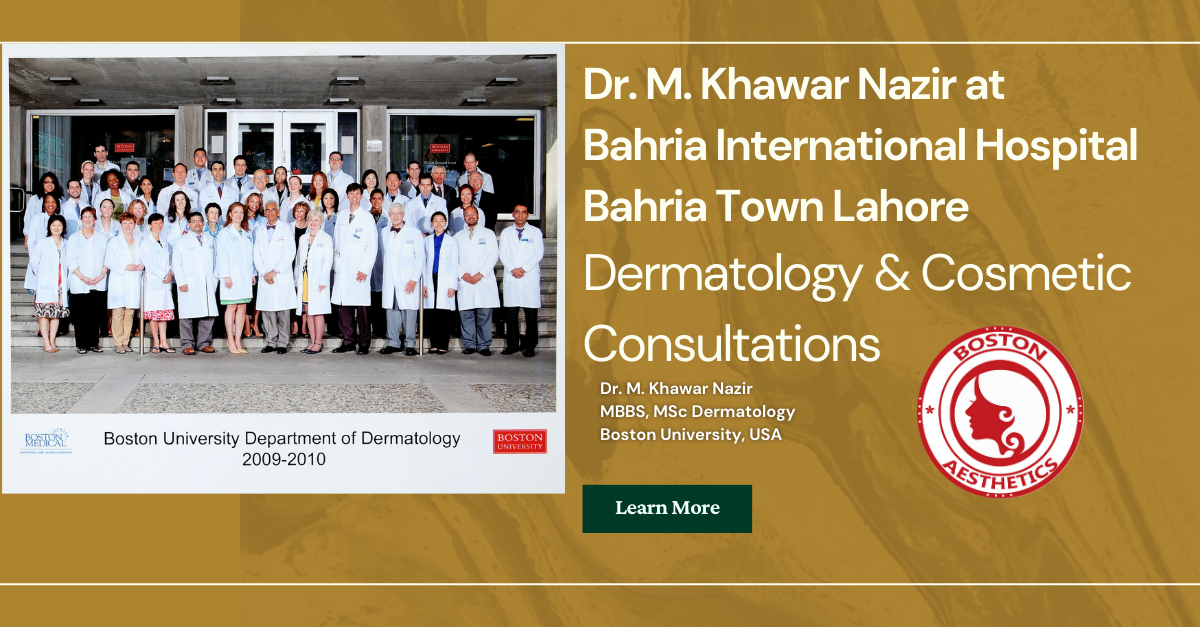
Also Available at Bahria Town Hospital
For consultations at Bahria International Hospital, Bahria Town Lahore, call at 042-111-296-297 for an appointment today.
If you can’t make it to the clinic, don’t worry—your skin health is still our priority. Dr. M. Khawar Nazir offers convenient online video consultations, allowing you to receive expert advice and personalised care from the comfort of your home. Whether you’re managing ongoing treatment or seeking advice on new concerns, our virtual consultations provide you with the same level of attention and care as an in-person visit. To book your online consultation, simply call or WhatsApp us at 03334046479.
Author Information:
Dr. M. Khawar Nazir, MBBS, MSc Dermatology, Boston University, USA
American Trained Dermatologist in Lahore
Dermatologist, Cosmetic, LASER & Hair Transplant Surgeon
Boston Aesthetics, 15-A, Hali Road, Gulberg II, Lahore | 03334046479
Posts

Pakistan Medical and Dental Council (PMDC):
- Website: https://pmdc.pk/
Punjab Public Service Commission (PPSC):
- Website: https://www.ppsc.gop.pk/


Disclaimer: The information provided in this blog post, “BS Dermatology Degree: Can You Practice in Pakistan?” is intended for educational and informational purposes only. While we strive for accuracy, the medical field and educational requirements are subject to change. Readers are advised to consult official medical education authorities or professional advisors for the most current information. Boston Aesthetics and Dr. M. Khawar Nazir are not liable for any actions taken based on the content of this article.
Leave a Reply