Get the Best Hair Transplant in Lahore by American-Trained Dermatologist
Are you looking for the best hair transplant services in Lahore, Pakistan? At Boston Aesthetics, we offer top-tier hair transplantation procedures, including both Follicular Unit Extraction (FUE) and Follicular Unit Transplantation (FUT). Our clinic is renowned for delivering outstanding results, ensuring our patients achieve the natural-looking hair they desire.
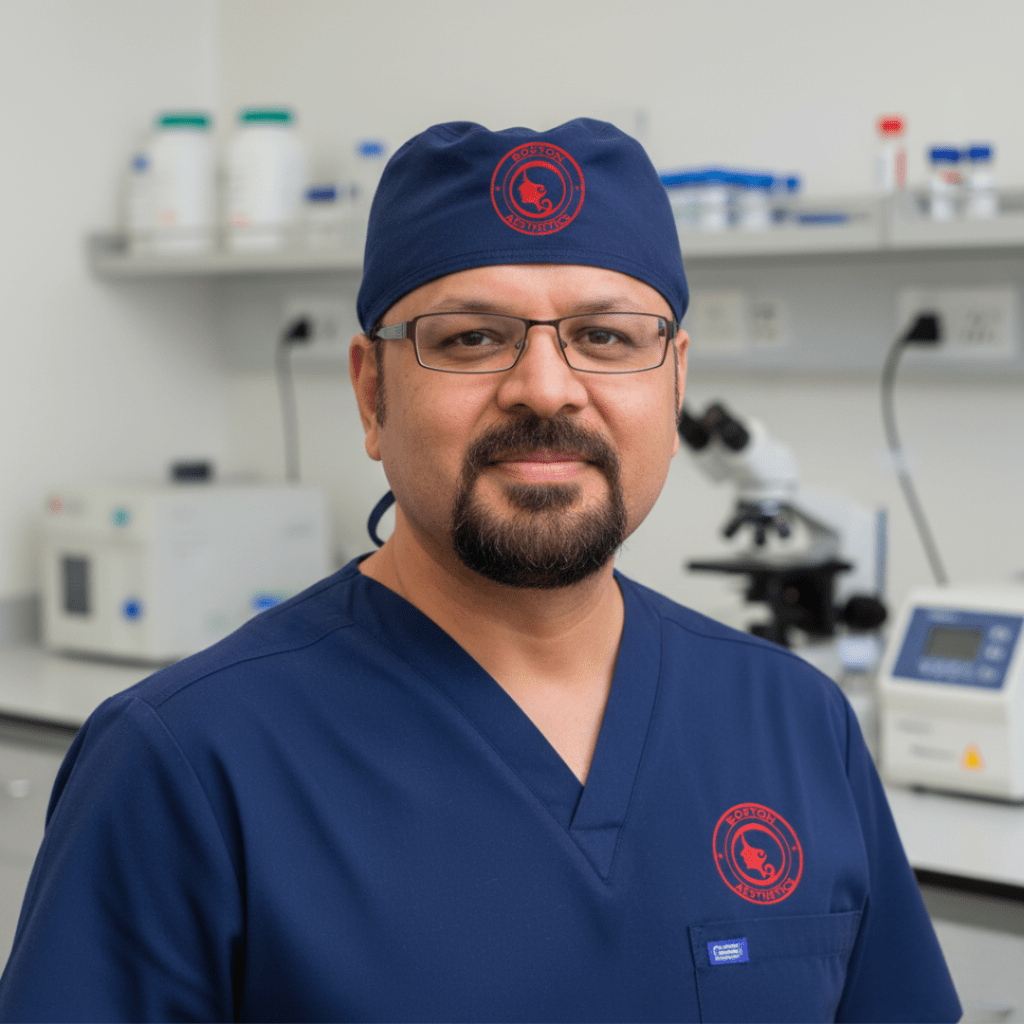

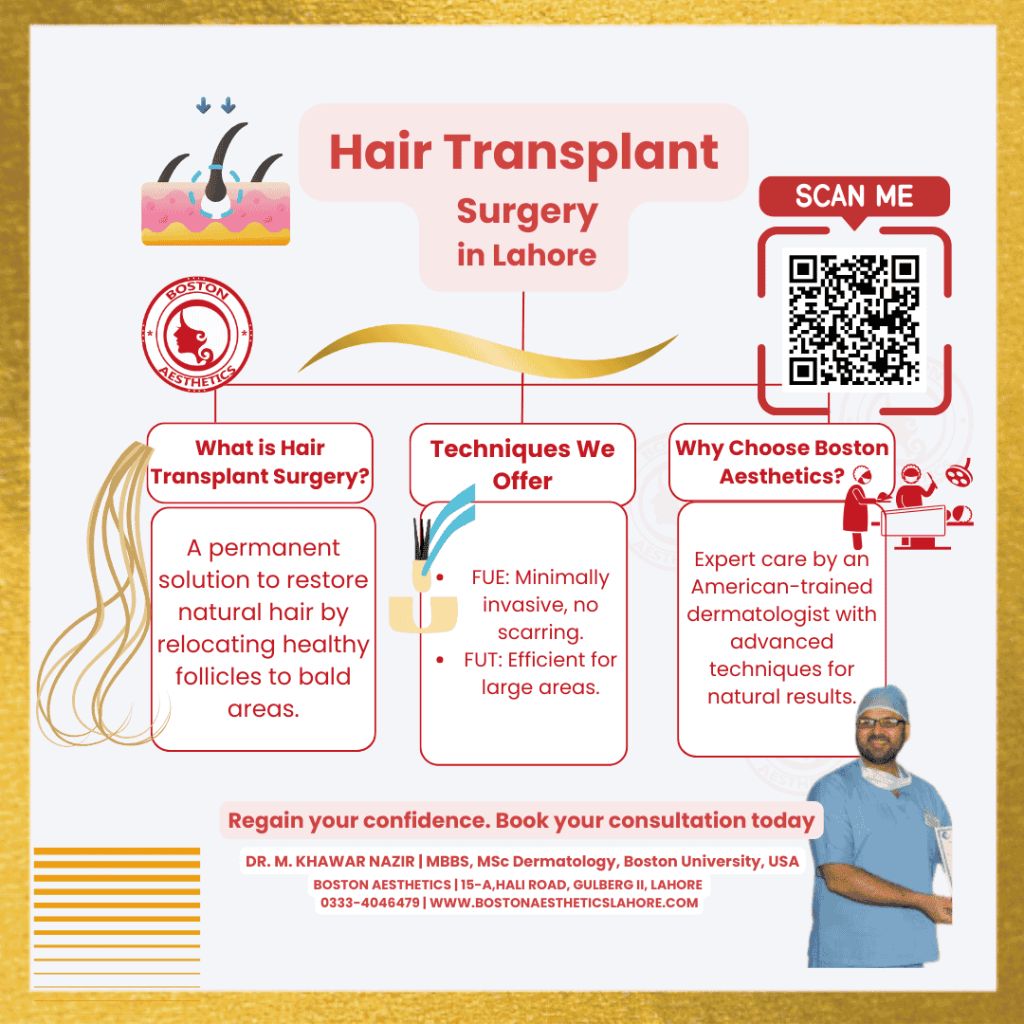
Table of Contents
SUMMARY
- What is Hair Transplant Surgery?
Hair transplant surgery is a proven medical procedure that restores hair by relocating healthy follicles from donor areas (commonly the back of the scalp) to thinning or bald areas, offering a natural and permanent solution to hair loss. - Who is a Good Candidate?
Ideal candidates include individuals experiencing male or female pattern baldness, those with thinning hair due to aging or other factors, and individuals seeking to restore hair in areas affected by scars or injuries. - Key Benefits of Hair Transplants
- Natural-looking and permanent results.
- Boosts confidence and self-esteem.
- Minimally invasive with quick recovery times.
- Hair Transplant Techniques Offered
- FUT (Follicular Unit Transplantation): A strip of scalp is removed, and grafts are implanted into bald areas.
- FUE (Follicular Unit Extraction): Individual follicles are harvested and transplanted, leaving minimal scarring.
- Why Choose Boston Aesthetics Lahore?
- Dr. M. Khawar Nazir, an American-trained dermatologist, ensures precision and care.
- Advanced techniques and modern facilities for safe and effective procedures.
- Transparent pricing and customized treatment plans for optimal results.
Share the Knowledge: If you or someone you know is exploring hair restoration options, this guide provides comprehensive insights into safe, reliable, and result-oriented hair transplant solutions available in Lahore.
Why Choose Boston Aesthetics for Hair Transplant in Lahore?
Our clinic is led by Dr. M. Khawar Nazir, an American-trained dermatologist and hair transplant surgeon with extensive experience in advanced hair restoration techniques. Dr. Nazir’s expertise ensures precision, high graft survival rates, and excellent aesthetic outcomes.
Our Services Include:

- FUT Hair Transplant: This traditional method involves harvesting a strip of scalp from the donor area, which is then meticulously dissected into individual follicular units. The prepared grafts are transplanted into the recipient area to create a natural hairline.
- FUE Hair Transplant: A minimally invasive technique where individual hair follicles are extracted from the donor area and implanted into the thinning or balding areas. This method leaves minimal scarring and offers a quicker recovery time.
- Hair Plantation: Our hair plantation services are tailored to meet the unique needs of each patient, ensuring personalized care and optimal results.
- Affordable Hair Transplant Costs: We offer competitive pricing for our hair transplant procedures, ensuring you receive the best value for your investment in your appearance.
Hair transplant surgery is a medical procedure that aims to restore hair growth in areas of thinning or baldness. Performed by experienced professionals like Dr. M. Khawar Nazir, this surgery can be a viable option for many dealing with hair loss.
In this insightful podcast episode, Dr. M. Khawar Nazir, an esteemed American-trained skin specialist in Lahore, delves into the prevalent causes of hair loss and explores the latest, most effective treatment options. Listen in to gain valuable knowledge on how to manage and treat hair loss, guided by expert advice from a leading specialist in the field.
Types:
- Follicular Unit Transplantation (FUT): Involves removing a strip of scalp, then harvesting the hair follicles to transplant into thinning areas.
- Follicular Unit Extraction (FUE): Involves removing individual hair follicles directly from the donor area and transplanting them.

FUT vs. FUE Hair Transplants: Understanding the Types, Techniques, and Outcomes
Hair transplant surgery is a highly effective way to combat hair loss, offering natural-looking and permanent results. Among the available techniques, Follicular Unit Transplantation (FUT) and Follicular Unit Extraction (FUE) are the most widely practiced. Each method has its unique approach, benefits, and considerations. In this in-depth guide, we’ll explore the key differences between FUT and FUE to help you make an informed decision.
1. Follicular Unit Transplantation (FUT)
What is FUT?
Follicular Unit Transplantation, commonly known as the “strip method,” involves removing a thin strip of skin from the donor area (usually the back of the scalp). The strip is then dissected under a microscope to harvest individual hair follicles, which are transplanted into areas of thinning or balding.
Procedure Steps
- Donor Area Preparation:
- The donor area is numbed with local anesthesia, and a strip of scalp tissue is carefully excised.
- Closure:
- The wound in the donor area is closed with sutures or staples, leaving a linear scar.
- Follicle Harvesting:
- The strip is dissected under high-powered microscopes to isolate follicular units containing 1-4 hairs.
- Recipient Site Preparation:
- Tiny incisions are made in the recipient area to implant the harvested follicles.
- Transplantation:
- Individual follicles are meticulously placed into the incisions, following the natural hairline and growth pattern.
Advantages of FUT
- High Graft Yield: Ideal for patients requiring a large number of grafts in a single session.
- Cost-Effective: Generally more affordable than FUE.
- Preserves Donor Area: Allows for efficient use of donor hair, leaving surrounding follicles intact.
Disadvantages of FUT
- Linear Scar: Leaves a permanent scar in the donor area, which may be visible with short hairstyles.
- Longer Recovery: Healing in the donor area may take 2-3 weeks.
- Post-Surgery Discomfort: Can cause tightness or numbness in the donor area.
2. Follicular Unit Extraction (FUE)
What is FUE?
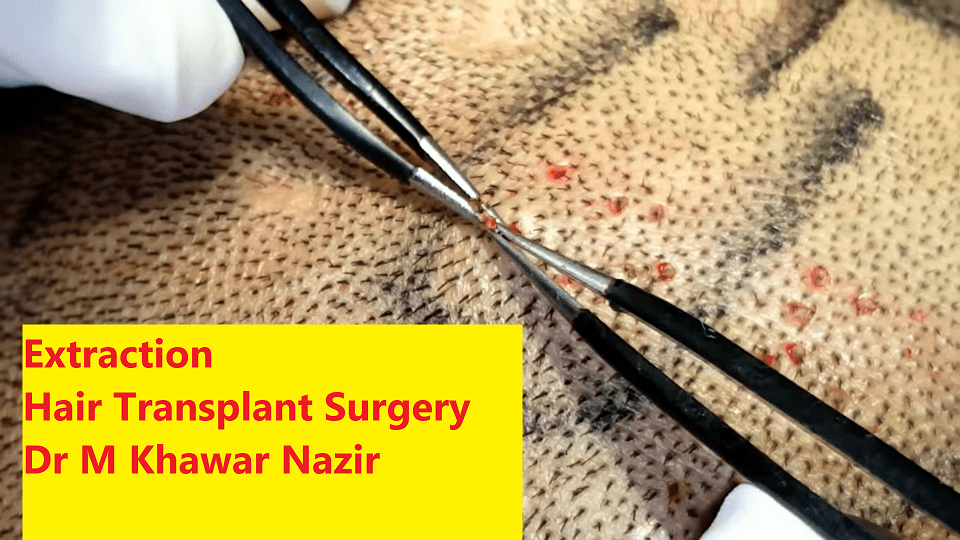
Follicular Unit Extraction is a minimally invasive technique where individual hair follicles are directly extracted from the donor area using a micro-punch device and transplanted into the recipient area.
Procedure Steps
- Donor Area Preparation:
- The donor area is shaved, and local anesthesia is applied.
- Follicle Extraction:
- Individual follicles are extracted using a specialized micro-punch tool (0.8-1.0 mm diameter).
- Recipient Site Preparation:
- Small incisions are created in the recipient area to accommodate the extracted follicles.
- Transplantation:
- The follicles are placed one by one into the prepared sites, ensuring a natural appearance.
Advantages of FUE
- No Linear Scar: Leaves tiny, dot-like scars that are virtually invisible.
- Faster Recovery: Minimal discomfort and quicker healing compared to FUT.
- Versatile Donor Area: Hair can be harvested from other areas, such as the beard or chest, if scalp donor hair is limited.
Disadvantages of FUE
- Time-Consuming: Takes longer than FUT as each follicle is extracted individually.
- Higher Cost: Generally more expensive due to the labor-intensive nature of the procedure.
- Limited Graft Yield: May not be ideal for patients requiring a large number of grafts in a single session.
FUT vs. FUE: A Detailed Comparison
| Aspect | FUT | FUE |
| Technique | Strip of scalp removed for follicle harvesting. | Individual follicles extracted with a micro-punch tool. |
| Scarring | Linear scar in the donor area. | Small, dot-like scars that are less visible. |
| Recovery Time | 2-3 weeks for complete recovery. | 5-7 days for minor redness and healing. |
| Graft Yield | High; suitable for large graft requirements. | Moderate; limited by the number of individual extractions. |
| Cost | More affordable. | Typically more expensive. |
| Ideal Candidate | Those needing large graft numbers or have longer hair. | Those preferring minimal scarring or have smaller bald areas. |
How to Choose Between FUT and FUE
Considerations
- Extent of Hair Loss:
- FUT is better for extensive hair loss requiring a higher number of grafts.
- FUE is ideal for smaller areas or those desiring less invasive surgery.
- Lifestyle:
- FUE suits individuals who prefer short hairstyles as it avoids a linear scar.
- FUT is more suitable for those who can conceal the donor scar with longer hair.
- Budget:
- FUT is often more cost-effective for large sessions.
- FUE may be pricier but offers advantages like quicker recovery and less visible scarring.
- Donor Area Availability:
- If donor hair is limited, FUE allows for harvesting from other body areas.
Avoiding Myths and Over-Marketing
- Unrealistic Claims: Beware of clinics promising “unlimited grafts” or “full coverage in one session,” as both techniques are limited by donor area capacity and individual anatomy.
- Actual Results: Both FUT and FUE can deliver natural-looking results, but patient expectations must align with realistic outcomes.
Question: Can Hair Transplant Be Performed on Diabetes Mellitus Patients?
Hair transplant surgery is a popular cosmetic procedure that restores hair growth, but when it comes to patients with Diabetes Mellitus, it is essential to approach the decision with caution. Diabetes, particularly when it is not well-controlled, can introduce certain risks that need to be considered before undergoing any surgical procedure, including hair transplant surgery.
Possible Risks for Diabetes Mellitus Patients During Hair Transplant Surgery
- Wound Healing Issues
One of the most common concerns for diabetic patients undergoing surgery is impaired wound healing. High blood sugar levels can hinder the body’s natural healing process by reducing the efficiency of white blood cells and impairing circulation. As a result, wounds may take longer to heal, increasing the risk of infection or complications at the donor or recipient site. - Increased Risk of Infection
Poorly controlled diabetes can lead to a weakened immune system, making it more difficult for the body to fight infections. Infections are a serious concern following any surgery, including hair transplants, and can complicate recovery, requiring additional medical interventions. - Scarring
Diabetic patients may also be at a higher risk for abnormal scarring, such as keloid formation. The healing process in diabetic patients can result in thicker, more noticeable scars, which could affect the cosmetic outcome of the hair transplant. - Poor Blood Circulation
Diabetes can lead to poor blood circulation, especially in the extremities. In hair transplant procedures, good blood supply is crucial for the survival of transplanted hair follicles. Reduced circulation can impact the success of the transplant by compromising the nourishment and oxygen supply to the grafts.
Should Diabetic Patients Consider Hair Transplants?
While it is possible for diabetic patients to undergo a hair transplant, it is essential that their diabetes be well-managed and under control prior to surgery. If a patient’s blood sugar levels are not within a normal range, the risks involved with the procedure—such as infection, slow healing, and scarring—become much higher.
Considerations Before Proceeding with Hair Transplant Surgery for Diabetic Patients
- Consultation with a Specialist
Before opting for a hair transplant, diabetic patients should consult both their dermatologist and endocrinologist to ensure that their blood sugar levels are stable and their condition is under control. Patients must disclose their complete medical history to avoid complications during the procedure. - Preoperative Guidelines
Adhering to preoperative instructions is crucial for diabetic patients. This may include fasting instructions or adjustments in medications. The surgeon will guide how best to manage diabetes around the time of surgery. - Postoperative Care and Monitoring
After the hair transplant, diabetic patients should be diligent in following their postoperative care plan. This includes monitoring the surgical sites for signs of infection and regularly checking blood sugar levels. Any abnormalities should be addressed immediately to prevent complications.
Risks of Cosmetic Procedures for Diabetic and Chronically Ill Patients
Hair transplants, though considered a cosmetic procedure, are still surgeries that carry inherent risks. For diabetic and other chronically ill patients, these risks should not be taken lightly. In cases where diabetes or another chronic illness is not well-controlled, elective cosmetic procedures may not be advisable due to the increased chances of complications, which could outweigh the cosmetic benefits.
In summary, while hair transplants can be performed on patients with Diabetes Mellitus, careful management of the condition is essential to minimize risks. A thorough consultation with healthcare providers is required to determine the safety and suitability of this procedure for diabetic individuals.
Take Home Message
Both FUT and FUE hair transplant techniques offer effective solutions for hair restoration, each with its own advantages. The right choice depends on factors like the extent of hair loss, personal goals, and lifestyle. Consulting an experienced hair transplant surgeon in Lahore is crucial for making an informed decision.
Prognosis
The success of a hair transplant in Lahore relies on multiple factors, including the expertise of the surgeon, the quality of donor hair, and post-surgery care. Dr. M. Khawar Nazir, an American-trained dermatologist, conducts thorough consultations to assess each patient’s unique case and design a personalized hair restoration plan for natural-looking results.
While hair transplant surgery can significantly improve hair density and confidence, outcomes vary from person to person. Not everyone is an ideal candidate, which is why professional evaluation is key.
To explore your options and determine if a hair transplant is the right solution for you, schedule a consultation with Dr. M. Khawar Nazir today!

In this image, the meticulous process of preparing hair grafts from a donor strip during Follicular Unit Transplantation (FUT) hair transplant surgery is depicted. The skilled hands of the surgeon carefully dissect the strip to harvest individual follicular units, ensuring precision and high graft survival rates for optimal hair restoration results.
Experience expert hair transplant surgery with Dr. M. Khawar Nazir at Boston Aesthetics, Lahore. Transform your hairline with the advanced FUT technique, performed by an American-trained dermatologist and hair transplant surgeon.

Experience the FUT difference with Dr. M. Khawar Nazir at Boston Aesthetics, Lahore.


Hair Transplant Surgery: Realistic Expectations, Outcomes, and Avoiding Over-Marketing Myths
Hair transplant surgery has become a popular solution for hair loss, offering promising results when performed by skilled professionals. However, understanding realistic expectations, possible outcomes, and the limitations of the procedure is crucial for patient satisfaction. Here’s an evidence-based guide to what you can truly expect from a hair transplant surgery.
Realistic Expectations of Hair Transplant Surgery
- Natural-Looking Results:
- Modern techniques like FUE (Follicular Unit Extraction) and FUT (Follicular Unit Transplantation) aim to mimic the natural growth patterns of hair, providing a natural appearance.
- Results typically start to show 4-6 months after surgery, with full outcomes visible in 12-18 months.
- Permanent Solution:
- Hair transplanted from the safe donor zone (usually the back or sides of the scalp) is resistant to hair loss caused by androgenetic alopecia, offering lasting results.
- Density Improvements:
- A hair transplant can enhance hair density, but it may not achieve the same density as your original, natural hair.
- Restoration in Targeted Areas:
- Hair transplant surgery is highly effective for filling bald spots or receding hairlines, but its success is limited by the available donor hair.
Unrealistic Expectations
- Full Scalp Coverage:
- Complete restoration of a fully bald scalp is usually not possible due to the finite number of grafts available in the safe donor area.
- Immediate Results:
- Patients should not expect instant gratification. New hair growth takes time and patience.
- Unlimited Donor Hair:
- The safe donor area has a limited number of healthy grafts that can be transplanted without affecting the overall appearance of the donor site.
- Hair That Never Falls Out:
- While transplanted hair is more resistant to hair loss, it is not entirely immune to factors like aging or medical conditions.
Chances of Hair Transplant Failure
While hair transplant surgery is highly successful in most cases, there are factors that can contribute to less-than-optimal outcomes:
- Poor Surgical Technique: Improper graft handling, incorrect placement, or insufficient depth can lead to poor growth.
- Inadequate Donor Supply: A limited donor area may not provide enough grafts for satisfactory results.
- Unrealistic Expectations: When patients expect more than what the procedure can realistically achieve, they may feel disappointed despite good surgical outcomes.
- Post-Surgery Care: Neglecting post-operative care instructions can lead to infections or graft failure.
The success rate of hair transplant surgeries is generally high, with most patients experiencing 80-90% of transplanted grafts growing successfully.
Donor Area Considerations
- Safe Donor Area Capacity:
- Typically, 1500 to 4,000 grafts can be harvested from the safe donor zone over multiple sessions.
- Each graft usually contains 1-4 hair follicles, depending on the patient’s natural density.
- Donor Area Preservation:
- Harvesting too many grafts can lead to over-thinning of the donor site, compromising its appearance.
| Aspect | Details |
|---|---|
| What is Hair Transplant Surgery? | A medical procedure to restore hair by transferring healthy follicles from donor areas to bald or thinning regions. This results in natural, permanent hair growth. |
| Who Can Benefit from a Hair Transplant? | – Individuals with male or female pattern baldness. – People with thinning hair due to age or genetics. – Those with scars or injuries causing hair loss. |
| Types of Hair Transplant Techniques | – FUT (Follicular Unit Transplantation): A strip of scalp is removed, and grafts are implanted into bald areas. – FUE (Follicular Unit Extraction): Individual hair follicles are extracted and implanted with minimal scarring. |
| Procedure Steps | 1. Consultation to assess hair loss and design a personalized treatment plan. 2. Donor hair extraction using either FUT or FUE method. 3. Implantation of grafts into bald areas for natural hairline restoration. 4. Post-surgery care for optimal healing and growth. |
| Expected Results | – Visible improvement within 6–12 months. – Natural-looking, permanent hair growth. – Improved confidence and aesthetics. |
| Common Questions | – Is the procedure painful? Minimal discomfort is managed with local anesthesia. – How long does it take? Typically 4–8 hours, depending on the area covered. – Will it leave scars? Modern techniques like FUE minimize scarring. |
| Recovery and Aftercare | – Mild swelling and scabbing are normal for a few days. – Avoid strenuous activities for a week. – Regular follow-ups ensure proper healing and progress. |
| Why Choose Boston Aesthetics Lahore? | – Led by Dr. M. Khawar Nazir, an American-trained dermatologist. – Expertise in advanced hair restoration techniques. – State-of-the-art facilities with patient-focused care. |
| Cost and Affordability | Transparent pricing tailored to individual needs. Cost depends on the technique used and the number of grafts required. |
| Precautions Before Surgery | – Avoid smoking and certain medications as advised by the doctor. – Maintain a healthy scalp by following pre-procedure guidelines. |
| Post-Surgery Care Tips | – Use prescribed medications and shampoos. – Avoid direct sun exposure and scratching the scalp. – Attend all follow-up appointments for optimal results. |
Why Share This Information?
This table answers all critical questions about hair transplant surgery, providing clarity and confidence for anyone considering this life-changing procedure. Sharing it can help others make informed decisions and regain their confidence with expert care at Boston Aesthetics Lahore.
Myths vs. Realities: Over-Marketing in Hair Transplant Surgery
Fake or Misleading Claims:
- Overpromised Density: Claims of achieving full scalp density in one session are often unrealistic.
- Unlimited Grafts: Some marketing falsely suggests that there are no limits to donor area harvesting.
- Guaranteed Results: No surgical procedure, including hair transplants, can guarantee perfect outcomes for every patient.
Realistic Marketing:
- Achievable Results: Ethical clinics emphasize gradual improvement, natural aesthetics, and the importance of patient-specific planning.
- Transparency: Reputable surgeons provide honest assessments of what can and cannot be achieved based on individual factors like hair loss severity and donor area quality.
To Sum Up
Hair transplant surgery offers a transformative solution for many individuals facing hair loss, but it is essential to approach it with realistic expectations. While the procedure can provide significant improvements, patients must understand its limitations and risks to make informed decisions. Avoid falling for over-marketed promises and instead consult a skilled, ethical surgeon who prioritizes your unique needs and safety.
If you’re considering a hair transplant, trust only experienced professionals who provide transparent guidance and focus on achieving natural, lasting results tailored to your expectations.
Pre-Surgery Instructions for Hair Transplant Patients
To ensure a smooth and successful hair transplant surgery, please follow these instructions carefully:
Two Weeks Before Surgery
- Avoid Exercise: Refrain from intense physical activities like gym workouts, running, or heavy lifting that may strain your body.
- Medications and Supplements:
- Avoid blood thinners (e.g., aspirin, ibuprofen) or any medications that increase bleeding risks unless approved by your doctor.
- Discontinue multivitamins, antioxidants, or supplements that may lead to blood thinning or increased clotting time.
- Avoid Smoking and Alcohol: Stop smoking and consuming alcohol as they can impair healing and increase surgical risks.
One Week Before Surgery
- Hair Care: Avoid any harsh chemical treatments on your scalp (e.g., coloring, perming).
- Sun Exposure: Minimize exposure to direct sunlight to prevent scalp irritation.
- Hydration: Stay well-hydrated throughout the week to ensure optimal health.
The Day Before Surgery
- Rest Well: Get 8-10 hours of restful sleep the night before surgery.
- Hair Washing: Shampoo your scalp thoroughly in the evening or morning to ensure it is clean.
On the Day of Surgery
- Hair Care: Wash your scalp with a mild shampoo in the morning. Do not apply any oils, sprays, or styling products.
- Clothing: Wear a front-open, button-down shirt to avoid disturbing the transplanted area when changing clothes post-surgery.
- Comfortable Attire: Choose loose, comfortable clothing and shoes for the day.
- Breakfast: Have a light, non-oily breakfast to maintain energy levels during the procedure.
- Medications: Take only prescribed medications as directed by your doctor.
- Avoid Smoking, Alcohol, and Drugs: Do not smoke, consume alcohol, or take recreational drugs on the day of surgery.
Other Important Tips
- Arrive On Time: Be punctual and bring any necessary documents or prescriptions provided by the clinic.
- Accompaniment: Bring a family member or friend for support and to assist you after the procedure.
- Plan Your Day: Arrange for a ride back home after the surgery, as you may feel drowsy or tired.
- Relax: Stay calm and trust the surgical team for a successful procedure.
By following these guidelines, you can help ensure a safe and effective hair transplant experience.
Post Hair Transplant FUT Surgery Instructions
Followings are the instructions for the patient after hair transplant surgery.
General Care
- Rest and Recovery: Keep your head elevated, especially when sleeping, for the first 3-5 days to minimize swelling. Use extra pillows to keep your head propped up.
- Avoid Alcohol and Smoking: Alcohol and smoking can impede the healing process. Avoid these for at least 3 weeks post-surgery.
- Diet and Hydration: Maintain a healthy diet rich in vitamins and minerals. Stay hydrated by drinking plenty of water to support the healing process.
Sleep Care
- Position: Sleep with your head elevated for the first week. Avoid sleeping on your stomach or sides to prevent pressure on the transplanted area.
- Pillow Protection: Use a soft towel or pillowcase to protect your pillows from any possible postoperative discharge.
Exercise Care
- Activity Restriction: Avoid any strenuous activities, heavy lifting, or exercises for at least 2 weeks. Light walking is acceptable.
- Sweating: Excessive sweating can increase the risk of infection. Avoid activities that may cause heavy sweating.
Wound Care and Washing
- Touching: Do not touch, scratch, or rub the transplanted area. This is crucial to prevent dislodging the grafts.
- Cleaning: The donor area can be gently cleaned with a soft, damp cloth. Avoid direct water pressure on the transplanted follicles for the first week.
- Hair Washing: You may start gently washing your hair 48 hours after the surgery with a mild, unscented shampoo. Use a cup to rinse your hair gently for the first week.
Managing Swelling and Bruising
- Swelling: Some swelling and bruising around the forehead and eyes are normal. This typically resolves within the first week. Applying gentle, cool compresses can help reduce swelling.
- Medication: Take prescribed anti-inflammatory medications as directed by your doctor.
Pain Management
- Medication: If you experience any discomfort, you may take the prescribed pain medication as directed. Avoid any aspirin-based medications as they can increase bleeding.
Exposure to Sunlight
- Protection: Protect the transplanted area from direct sunlight for the first few months. If going out is necessary, wear a loose-fitting hat after the first week.
Follow-Up and Communication
- Appointments: Attend all scheduled follow-up appointments so we can monitor your healing and the progress of your hair growth.
- Contact: If you have any questions or concerns during your recovery, please do not hesitate to contact us at 03334950934. We are available 24 hours to assist you.
Patience is Key
- Healing and Growth: Remember, it can take 6 to 12 months to see the full results of your hair transplant. Patience and following these post-operative care instructions are crucial during this period.
Your well-being is our top priority. Wishing you a smooth and swift recovery.
FAQ | General Questions About Hair Transplants
- What is a hair transplant?
- A surgical procedure where hair follicles are moved from the donor area (usually the back or sides of the scalp) to areas experiencing thinning or baldness.
- What are the main types of hair transplants?
- Follicular Unit Transplantation (FUT): Involves removing a strip of scalp to harvest hair follicles.
- Follicular Unit Extraction (FUE): Extracts individual follicles directly from the donor area.
- Is a hair transplant permanent?
- Yes, transplanted hair is typically permanent as it comes from areas resistant to hair loss.
- What is the best age for a hair transplant?
- The ideal age is usually 30 and older, when hair loss patterns are more stable.
- What are the side effects of a hair transplant?
- Mild swelling, redness, or scabbing in the recipient and donor areas. Rarely, infection or poor growth of transplanted hair may occur.
- How long does it take to recover from a hair transplant?
- Most patients can resume normal activities within a week. Full recovery and visible results typically take 6-12 months.
Cost and Coverage
- How much does a hair transplant cost in Pakistan?
- Hair transplant costs in Pakistan typically range from PKR 100,000 to 500,000, depending on the clinic, surgeon, and number of grafts required.
- What is the cost of 3,000 hair grafts in Pakistan?
- The cost for 3,000 grafts is approximately PKR 150,000 to 400,000, depending on the clinic and technique used.
- Is 5,000 grafts a lot?
- Yes, 5,000 grafts cover a significant area, suitable for extensive hair loss.
- How much area do 5,000 grafts cover?
- It can cover areas such as the frontal hairline, crown, and mid-scalp depending on hair density and follicle quality.
Procedure and Techniques
- Is a hair transplant painful?
- Local anesthesia minimizes pain during the procedure. Patients may experience mild discomfort post-surgery.
- How many grafts are needed for a full head?
- Typically, 4,000 to 6,000 grafts are required, depending on the extent of baldness and desired density.
- Which hair transplant method is better: FUE or FUT?
- Both have benefits. FUE offers minimal scarring, while FUT may provide a higher graft yield in one session.
- What happens 10 years after a hair transplant?
- Transplanted hair remains, but surrounding natural hair may thin. Maintenance with medications or further transplants might be needed.
- Does transplanted hair turn grey?
- Yes, transplanted hair will age naturally and may turn grey over time like the rest of your hair.
- Can donor hair grow back?
- No, the hair removed from the donor area does not grow back, but the surrounding hair compensates for the volume.
Aftercare and Maintenance
- What should I avoid after a hair transplant?
- Avoid strenuous activities, smoking, alcohol, and direct sunlight for at least two weeks. Follow all aftercare instructions.
- Can I wear a hat after a hair transplant?
- Yes, but only loose-fitting hats to avoid disturbing the grafts, typically after 5-7 days.
- How to sleep after a hair transplant?
- Sleep with your head elevated for the first week to reduce swelling.
- Which shampoo is good after a hair transplant?
- Use a mild, non-scented shampoo as recommended by your surgeon.
- Can I shave my head after a hair transplant?
- Shaving should be avoided for at least 4-6 weeks post-surgery.
Success Rates and Longevity
- What is the success rate of hair transplants?
- Success rates are 80-95%, depending on the surgeon’s expertise and adherence to aftercare.
- Can a hair transplant fail?
- Failure is rare but can occur due to poor surgical technique, improper aftercare, or health conditions affecting hair growth.
- Do transplanted hairs fall out?
- Yes, transplanted hairs often shed within the first month, but they regrow in 3-4 months.
Choosing the Right Clinic
- Where can I find a reliable hair transplant clinic in Lahore?
- Boston Aesthetics, Lahore, offers advanced techniques performed by experienced surgeons.
- How do I choose the best hair transplant surgeon?
- Look for experience, certifications, patient reviews, and before-and-after photos of previous work.
- Is Turkey better for hair transplants than Pakistan?
- Turkey is known for affordable options, but Pakistan offers skilled surgeons and comparable results at competitive prices.
Wrap Things Up
Understanding the nuances of hair transplant surgery, including costs, methods, and realistic outcomes, can help you make an informed decision. Always consult an experienced surgeon to determine the best approach for your unique needs. For professional hair restoration services, contact Boston Aesthetics, Lahore, and start your journey to confidence today!
Why Boston Aesthetics?
- Expertise of Dr. M. Khawar Nazir: With a MBBS and MSc in Dermatology from Boston University, USA, Dr. Nazir brings world-class expertise to Lahore. His comprehensive knowledge in dermatology and cosmetic surgery ensures that you receive the highest standard of care.
- State-of-the-Art Clinic: Our clinic is equipped with the latest technology and adheres to the highest standards of hygiene and patient safety.
- Personalized Care: We believe in a patient-centric approach, providing individualized treatment plans that cater to your specific hair restoration needs.
Poll: Would You Consider Hair Transplant Surgery to Restore Your Hair? Take Our Quick Poll!
Are you struggling with hair loss and considering a hair transplant? We want to hear from you! Take our poll and let us know what factors would influence your decision. Your opinion matters, and we’ll help you navigate the hair restoration journey.
👉 Why participate? By taking part in this poll, you’re helping others who might be in the same position as you. Plus, it’s a great way to get insights on the most common concerns around hair transplant surgery. Share your thoughts and experiences, and don’t forget to invite your friends to vote too!
Feel free to share the poll and reshare it to help your friends learn more about hair restoration options!
Your participation helps create awareness about hair loss solutions and assists others in making informed decisions. Let’s get the conversation started!
Visit Us Today
Transform your hair and regain your confidence with the best hair transplant services in Lahore. Visit Boston Aesthetics at 15-A, Hali Road, Gulberg II, Lahore, Punjab, Pakistan. To book an appointment, call us at 03334046479.
Discover the difference that expert care and advanced technology can make. Choose Boston Aesthetics for your hair restoration journey.
Contact Information:
- Clinic Name: Boston Aesthetics
- Address: 15-A, Hali Road, Gulberg II, Lahore, Punjab, Pakistan
- Contact: 03334046479
Expert Hair Transplant Surgery by American-Trained Specialists in Lahore
Trustworthy External Resources:
- International Society of Hair Restoration Surgery (ISHRS) – Patient Information
🔗 https://ishrs.org/patients/
(Educational resources on hair restoration procedures, success rates, and ethical considerations.) - National Library of Medicine (NIH) – Hair Transplant Studies & Research
🔗 https://pubmed.ncbi.nlm.nih.gov/?term=hair+transplant
(Scientific studies and research articles on hair transplant efficacy and advancements.)