

Dyshidrotic Eczema (Pompholyx): A Comprehensive Guide
Dr. M. Khawar Nazir, MBBS, MSc Dermatology, Boston University, USA | Dermatologist, Cosmetic, LASER & Hair Transplant Surgeon
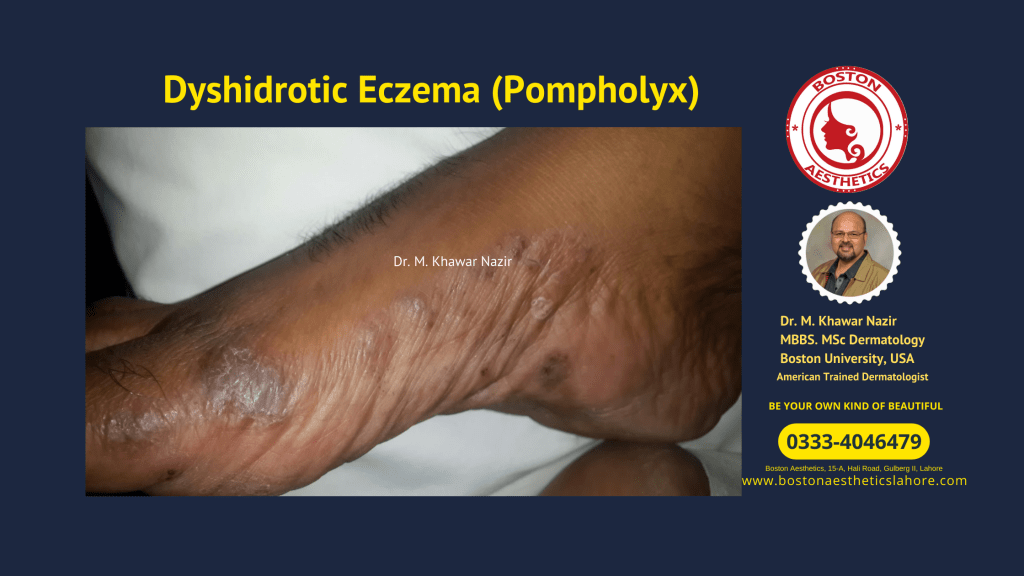
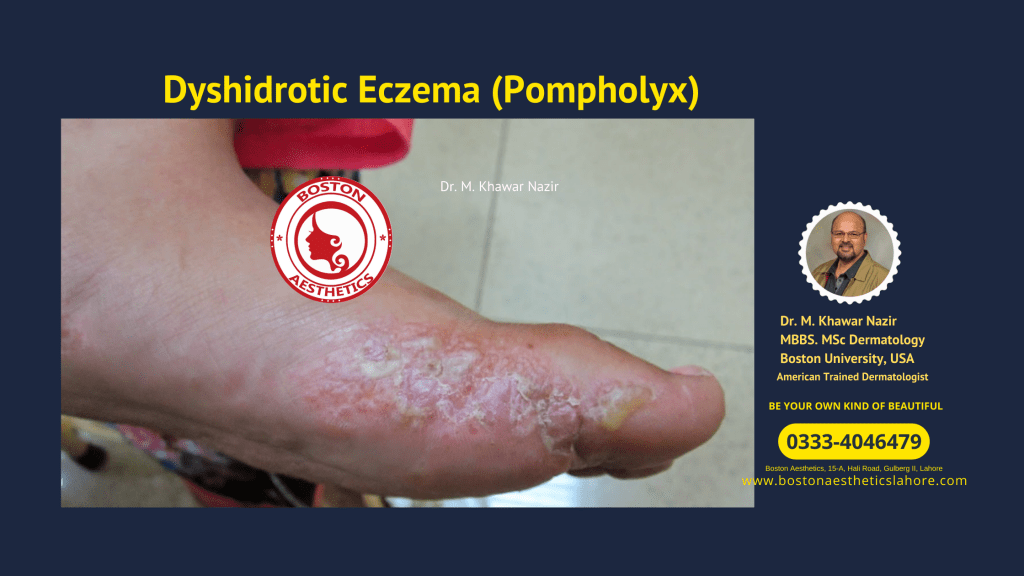
Dyshidrotic Eczema, commonly known as Pompholyx, is a perplexing skin condition that elicits a multitude of questions. Also known as Dyshidrotic Dermatitis, Vesicular Dermatitis, and Vesicular Hands & Feet Dermatitis, the term “Pompholyx” is derived from the Greek word for ‘bubble,’ an apt description of its blistering symptoms.
Prevalence: A Demographic Overview
Contrary to conventional wisdom, Dyshidrotic Eczema doesn’t discriminate based on gender, age, or race, although females and individuals between 20 and 40 years are reported to be more susceptible.
Symptoms and Diagnosis
Small, itchy blisters typically characterize Dyshidrotic Eczema. A clinical examination is often sufficient for diagnosis, but in stubborn cases, patch testing or skin scraping might be advised.

Food and Lifestyle Recommendations
- Food: Opt for anti-inflammatory foods like fish and leafy greens.
- Vitamins: Vitamin E and A can be beneficial.
- Water Intake: Stay hydrated.
- Fruits: Opt for raw fruits over juices.
- Dairy & Dry Fruits: Exercise caution as they can sometimes exacerbate the condition.
Various Causes and Management
- Allergies: Antihistamines and avoidance
- Stress: Mindfulness and meditation
- Environmental Factors: Protective clothing
- Fungal Infections: Antifungal creams
- Genetics: Unfortunately, not much can be done here other than symptomatic relief.
Role of Stress, Environment, and Lifestyle
Stress management techniques, environment-friendly skincare products, and lifestyle changes are non-negotiable aspects of dealing with this condition. Adequate sleep, balanced diet, and meditation significantly influence Dyshidrotic Eczema.
Commonly Searched Questions
- “Is Dyshidrotic Eczema contagious?”
- No, Dyshidrotic Eczema is not contagious. It cannot be transferred from person to person through touch or any other form of direct contact. The condition is generally related to internal factors such as stress, allergies, or irritants rather than infectious agents.
- “Does food exacerbate Dyshidrotic Eczema?”
- While food itself may not directly cause Dyshidrotic Eczema, certain foods can trigger or exacerbate symptoms in individuals who are already susceptible. It’s essential to maintain a balanced diet and to be aware of any food sensitivities you may have that could worsen the condition.
- “Can stress cause Dyshidrotic Eczema?”
- Yes, stress can be a significant trigger for Dyshidrotic Eczema. Stress activates the body’s inflammatory response, which can exacerbate skin conditions. Managing stress through relaxation techniques, exercise, and other stress-reduction methods can be beneficial in controlling symptoms.
The Weather Factor
Extreme weather conditions can worsen symptoms. A humidifier during winter and air conditioner during summer could be beneficial.
Role of Humidity and Specific Weather Conditions in Dyshidrotic Eczema
Humidity and weather play a substantial role in the onset and management of Dyshidrotic Eczema (also known as Pompholyx). Weather conditions can significantly influence skin health, affecting the skin’s moisture levels, oil production, and overall condition. Below, we delve deeper into the relationship between Dyshidrotic Eczema and specific environmental factors:
Humidity
- High Humidity: High levels of moisture in the air can sometimes exacerbate Dyshidrotic Eczema. The increased humidity can cause excessive sweating, leading to skin irritation and flare-ups of the condition.
- Low Humidity: On the flip side, low humidity, often experienced in winter months or in arid regions, can dry out the skin. Dry skin is more susceptible to irritation and can aggravate existing Dyshidrotic Eczema symptoms.
Seasonal Variation
- Summer: The hot and humid weather in summer can trigger excessive sweating, leading to increased irritation and itchiness. This is particularly problematic for individuals already suffering from Dyshidrotic Eczema.
- Winter: The cold, dry air during winter can significantly dry out the skin, leading to increased irritation and potential flare-ups. Indoor heating systems can further reduce humidity levels, exacerbating skin dryness.
Tips for Managing Dyshidrotic Eczema in Different Weather Conditions
- Moisturize Regularly: Regardless of whether the weather is hot or cold, moisturizing is crucial. Opt for a non-comedogenic, hypoallergenic moisturizer that suits your skin type.
- Use a Humidifier: In low-humidity environments, a humidifier can help maintain optimal skin moisture levels.
- Stay Hydrated: Drink plenty of fluids to keep your skin hydrated from within, especially in hot, humid weather when you’re likely to sweat more.
- Wear Appropriate Clothing: Choose breathable, moisture-wicking fabrics in hot, humid conditions and layer clothing to stay warm in colder climates.
Understanding the role of humidity and specific weather conditions in Dyshidrotic Eczema can help in better management of the condition. It also underscores the importance of adapting your skincare routine according to your environmental context.
Home Remedies and Prognosis
Cold compresses, coconut oil, and chamomile baths can be helpful. The prognosis varies but is often positive with proper management.
Conclusion: Take Control of Your Skin Health
Dyshidrotic Eczema is a complex skin condition influenced by various factors, including humidity, weather conditions, stress, diet, and more. The role of specific environmental conditions like humidity cannot be overstated, as they can either alleviate or exacerbate your symptoms. A multidimensional approach—encompassing lifestyle adjustments, dietary changes, and specialized skincare routines—can make a significant difference in managing this condition.
While at-home remedies and lifestyle changes can offer relief, for comprehensive and personalized treatment, expert guidance is crucial. If you find yourself grappling with persistent or severe symptoms of Dyshidrotic Eczema, don’t hesitate to seek professional help.
By understanding the intricate relationships between Dyshidrotic Eczema and your environment, you can take proactive steps to manage your symptoms and improve your quality of life.
The Necessity of Professional Consultation
Despite numerous self-help tips, visiting a qualified dermatologist like myself for a tailored treatment plan is vital.
For specialized consultation, book an appointment at Boston Aesthetics at 0333-4046479 via regular call, SMS, or WhatsApp.
This blog post is authored by Dr. M. Khawar Nazir, MBBS, MSc Dermatology, Boston University, USA | American Trained Dermatologist.
Feel free to schedule an appointment for tailored treatment options and further inquiries.
Boston Aesthetics, 15-A, Hali Road, Gulberg, II, Lahore | 03334046479
Leave a Reply